
Received an IRS Notice? What to Do Before Responding
July 7, 2026
A calm, step-by-step plan for handling IRS letters the right way
By Andrey Sapir, EA • SAPIR EA
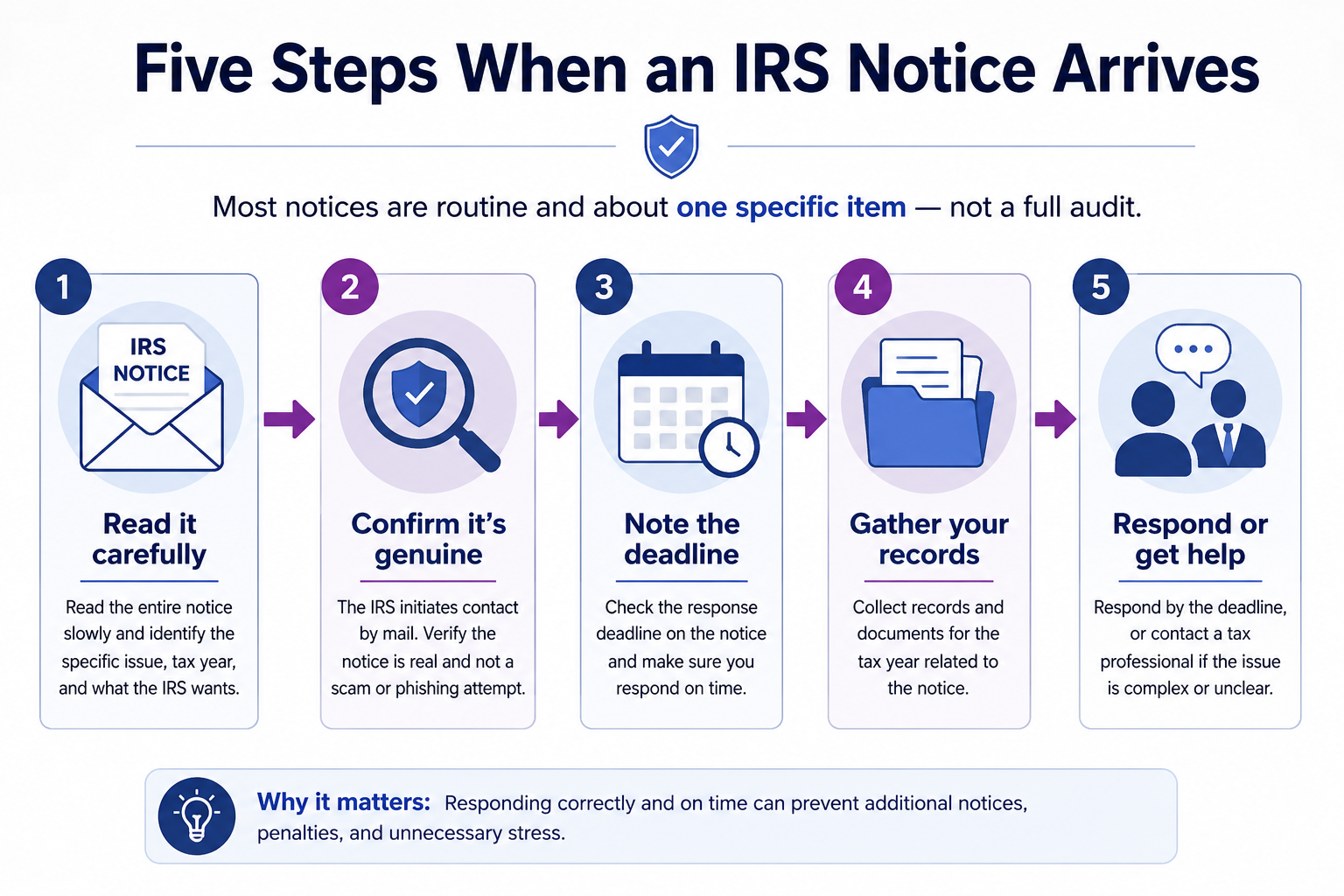
An envelope from the IRS can make your stomach drop — but most notices are routine, automated, and about one specific item rather than a full audit. What matters is responding correctly and on time. This guide walks through exactly what to do before you reply.
The Golden Rule
Do not ignore it, and do not panic.
Read the notice carefully, verify the information, and respond by the deadline.
First, Don’t Panic — Most Notices Are Routine
The IRS sends millions of notices a year for ordinary reasons: a number on your return did not match a form the IRS received, a balance is due, a payment posted, or the IRS needs to verify something. The vast majority are resolved with a single, timely response.
If you received a notice and are unsure what it means, SAPIR EA’s Tax Services can help you review the letter, understand the issue, and determine the right next step before you respond.
Read It Carefully and Identify the Issue
Every IRS notice has a number — often in the top or bottom corner, like CP2000 — and it tells you the tax year and the specific issue. Read it slowly and pinpoint exactly what the IRS is saying: what they are changing, what they want, and by when.
Many people respond to what they fear the notice says rather than what it actually says. Before reacting, identify the notice number, the tax year involved, the proposed change, and the response deadline.
Verify Before You Act
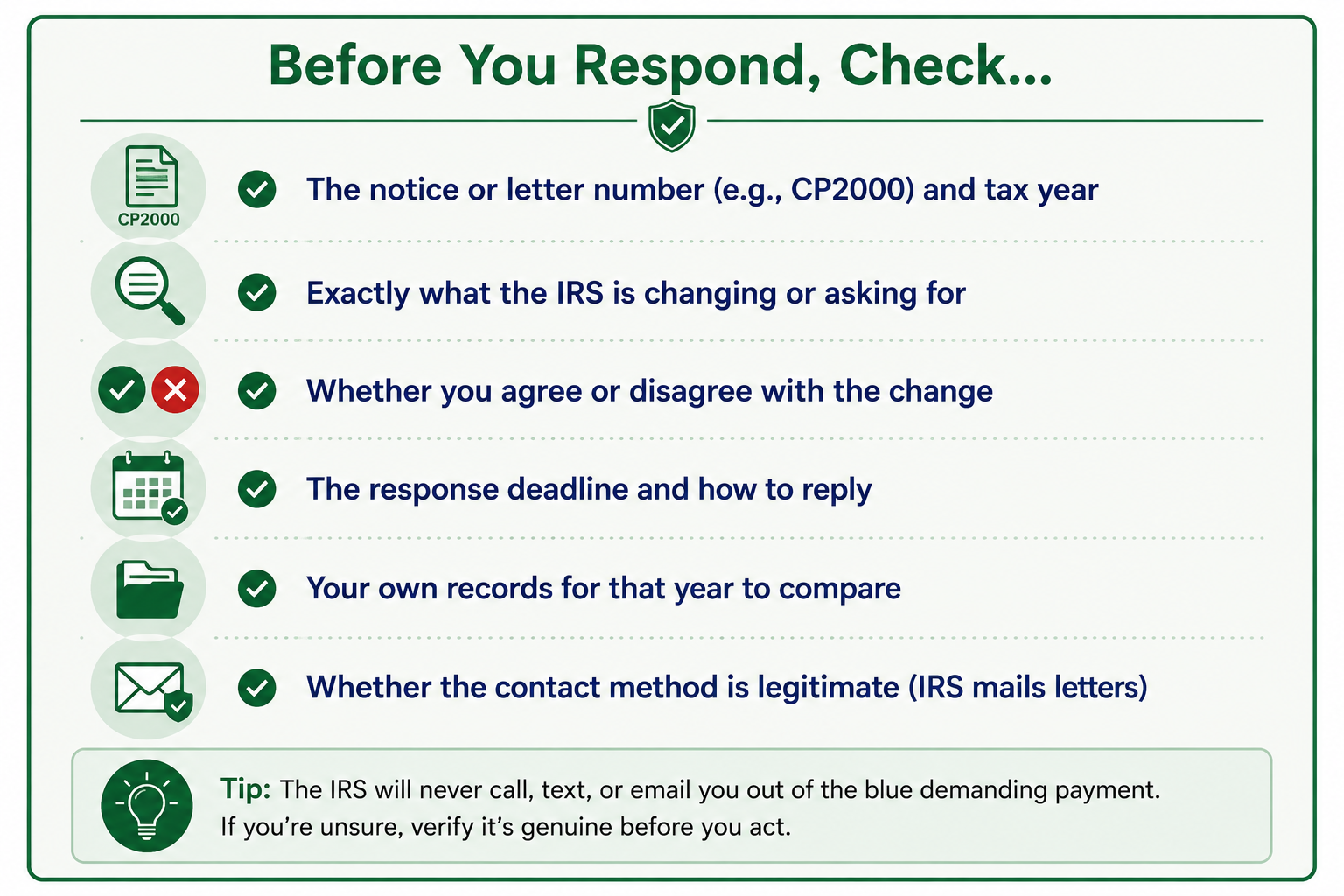
Compare the notice against your own records for that year. The IRS is not always right — mismatches happen because of missing forms, timing, or simple errors. Confirm whether you actually agree with the proposed change before you respond.
You should also make sure the notice is genuine. The IRS initiates contact by mail, not by surprise phone calls, texts, or emails demanding immediate payment.
Respond the Right Way
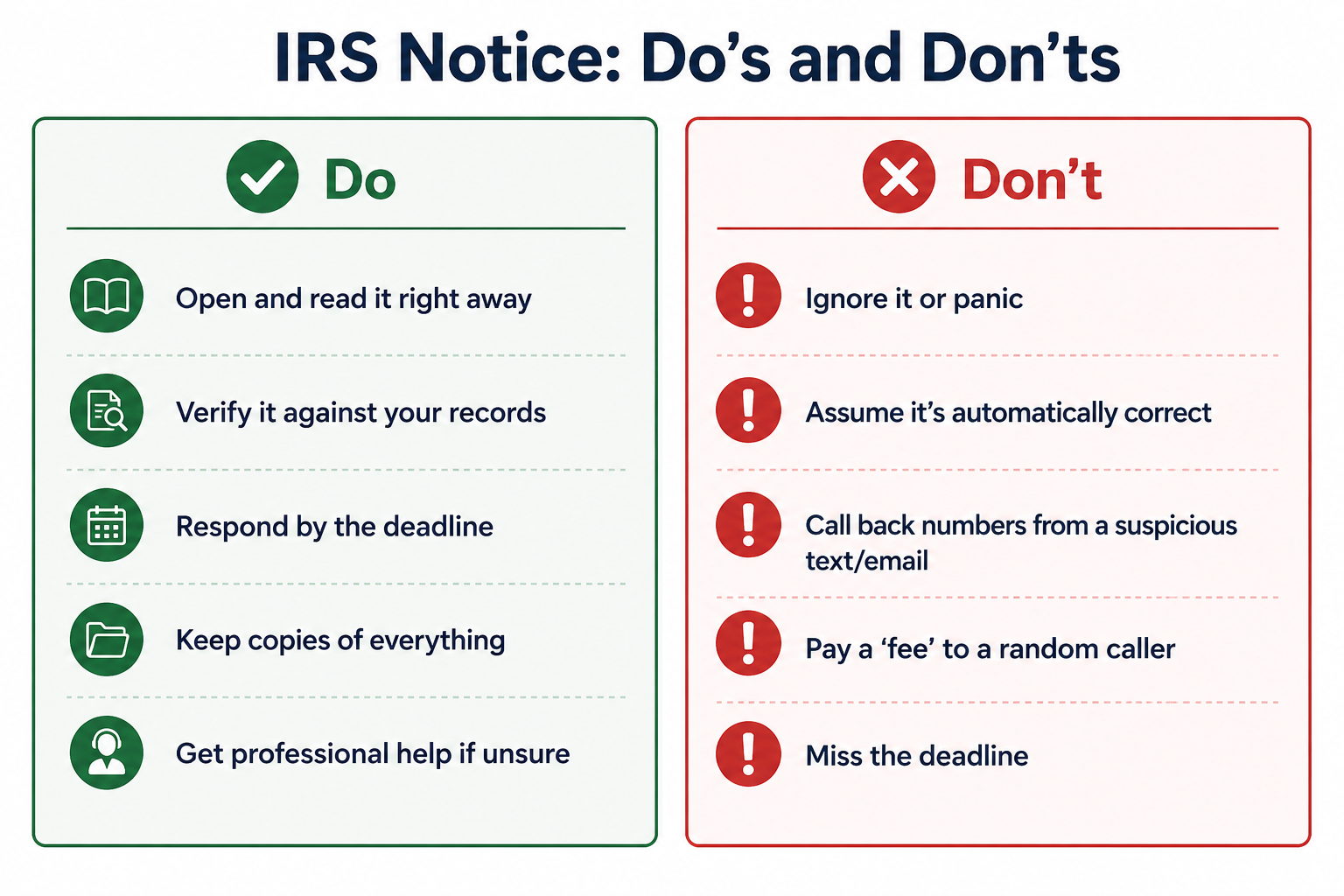
If you agree, follow the instructions to resolve it — that may mean paying a balance or simply signing and returning a form. If you disagree, you generally respond in writing with an explanation and supporting documents by the deadline. Either way, keep copies of everything you send and proof of when you sent it.
- Meet the deadline. Missing it can forfeit your right to dispute the change.
- Document everything. Keep the notice, your response, and proof of mailing.
- Get help when it’s complex. A professional can respond on your behalf and represent you before the IRS.
Key Takeaway
Don’t ignore or panic at an IRS notice. Identify the notice number and issue, verify it against your records, confirm it’s genuine, and respond in writing by the deadline.
The Bottom Line
An IRS notice is a problem to manage, not a crisis to fear. Handled promptly and correctly, most are cleared up with one good response.
If the notice involves a large amount, a proposed audit, or anything you do not understand, that is the time to bring in a professional. An Enrolled Agent can communicate with the IRS for you and make sure your response protects your position.
SAPIR EA’s Tax Services support individuals and business owners with tax preparation, planning, bookkeeping, and IRS notice assistance nationwide.
Need Help Responding to an IRS Notice?
Before you sign, pay, or mail anything, SAPIR EA can help you review the notice, verify the issue, and prepare the right response.
Contact UsThis article is general educational information, not individualized tax, legal, or financial advice. Tax rules change and depend on your specific facts. Please consult a qualified professional before acting.