Income Shifting Tax Strategy
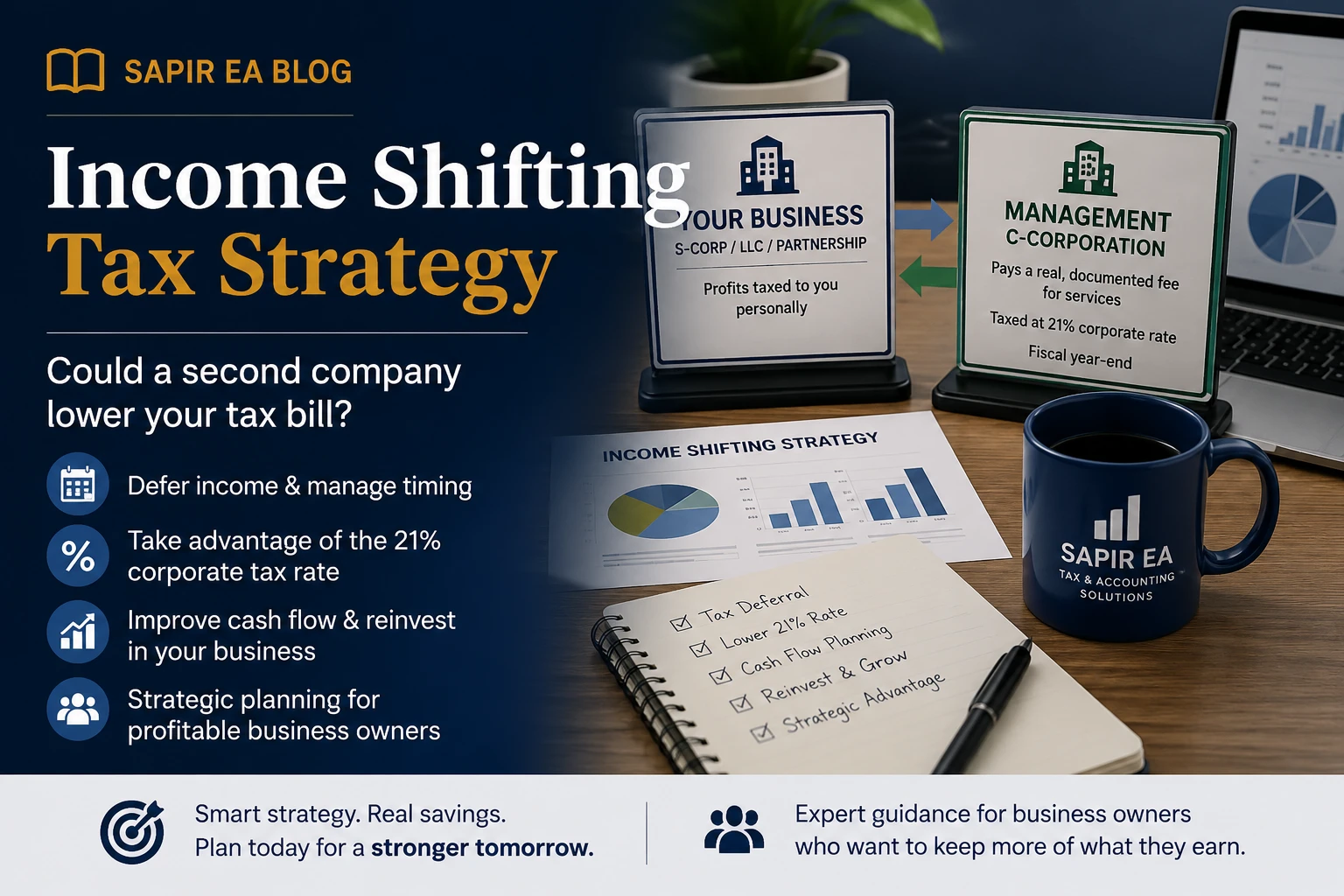
Could a Second Company Lower Your Tax Bill?
If you own a profitable business, you have probably had the same frustrating thought every April: it feels like a big slice of everything you earn goes straight to taxes. One planning idea that comes up for growing businesses is something tax pros call “income shifting” — moving part of your income into a separate C corporation so it is taxed there first, instead of landing entirely on your personal return all at once.
It sounds complicated, and the details matter, but the core idea is simple. Here is how it works, who it tends to help, and the fine print you should know before going anywhere near it.
The big idea in one sentence:
You set up a second company — a C corporation — that does real work for your main business and gets paid a fair fee for it. That income is then taxed at the corporation’s flat 21% federal rate and on its own timeline, instead of being taxed entirely to you personally this year.
How It Actually Works
Most small businesses are “pass-through” entities — S corporations, partnerships, LLCs, or sole proprietorships. “Pass-through” just means the profits flow straight onto the owners’ personal tax returns, where they get taxed at your individual rate. If you are a high earner, that rate can be steep.
Income shifting adds a second, separate company to the picture: a C corporation. Unlike a pass-through, a C corporation is its own taxpayer — it files its own return and pays its own tax. The new company provides genuine services to your main business: things like management, administration, marketing, consulting, staffing, or use of equipment. Your main business pays it a reasonable, well-documented fee for that work.
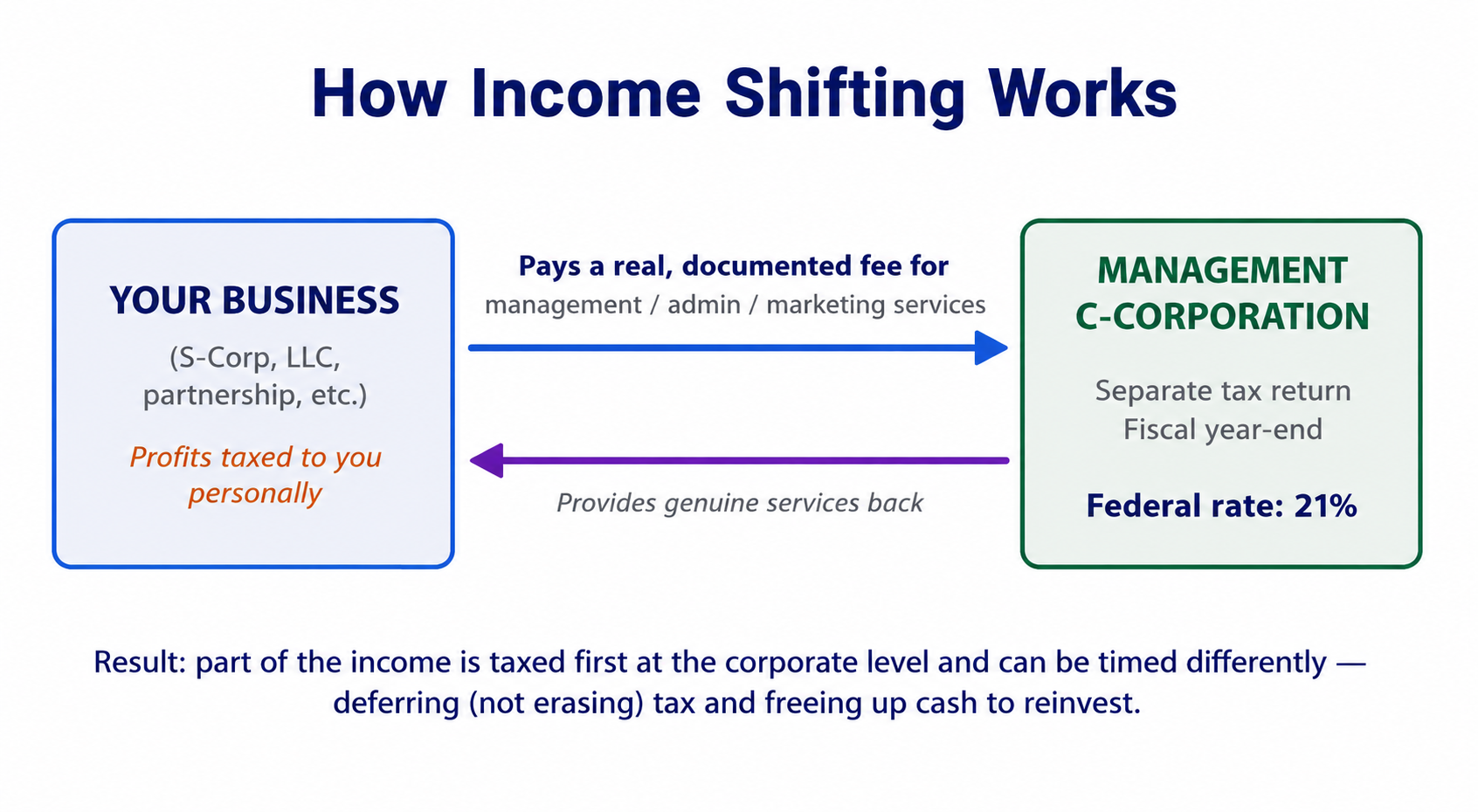
Because the C corporation is taxed separately, part of your business income gets taxed first at the corporate level — currently a flat 21% federal rate — rather than flowing entirely onto your personal return in the same year.
For business owners evaluating whether this structure makes sense, SAPIR EA’s business services can help review entity structure, tax planning opportunities, and the practical setup required to keep everything properly documented.
Why a “Fiscal Year” Matters
Here is the part that adds flexibility. You and most individuals are on a calendar-year schedule — your tax year ends December 31. But a C corporation can often choose a different year-end, known as a fiscal year. That mismatch in timing can let you shift when certain income is recognized and when tax is due, which helps with cash-flow and year-end planning.
Important reality check: this is about timing, not magic. Income shifting can defer when you pay tax; it does not make the tax disappear.
Five Reasons Business Owners Consider It
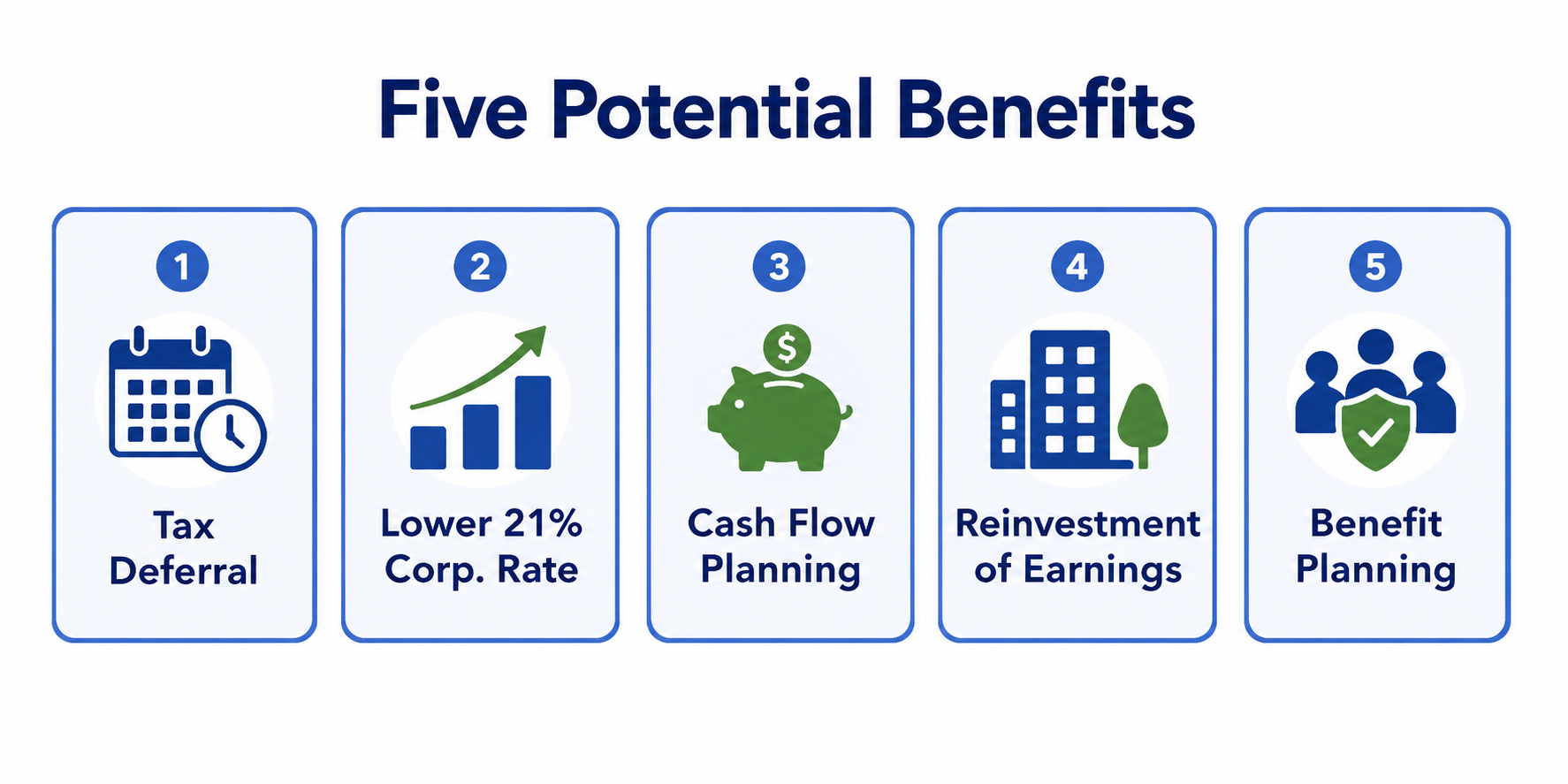
- Tax deferral. A fiscal-year C corporation can let income land in a different tax period, deferring — not erasing — when tax is paid.
- The 21% corporate rate. C corporations pay a flat 21% federal rate. For owners in high personal brackets, that can mean a lower initial tax cost on the earnings you keep in the company.
- Cash-flow planning. Keeping some earnings inside the corporation gives you more flexibility to fund payroll, equipment, expansion, or working capital.
- Reinvestment. If you don’t need to pull out every dollar of profit personally, you can reinvest part of it back into the business instead.
- Benefit planning. A C corporation can open the door to certain employee benefit and fringe-benefit arrangements — though these need careful review based on your role.
Is It Right for You?
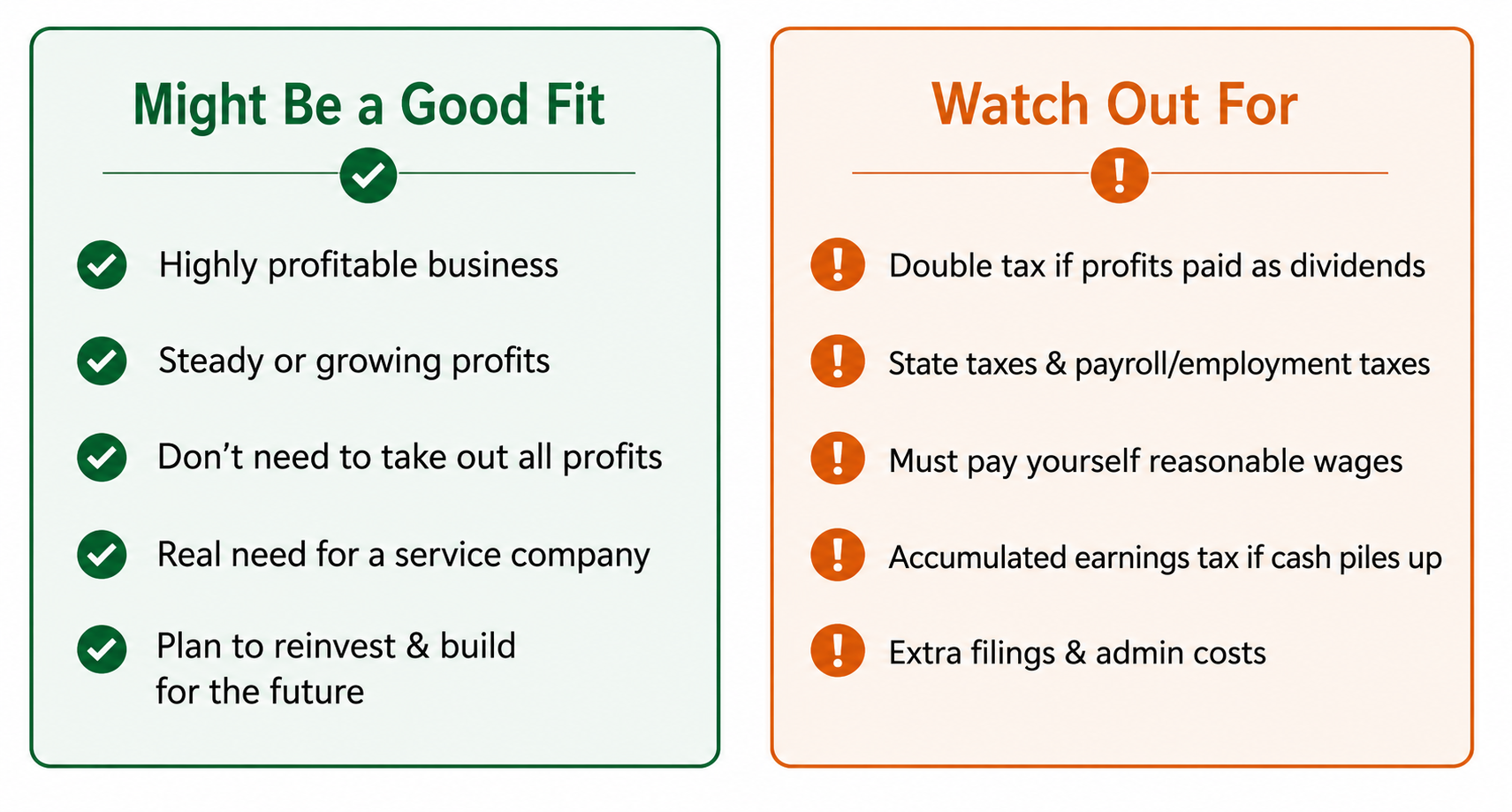
This strategy is not a fit for everyone. It tends to make sense for profitable pass-through businesses where the owner is paying tax personally on all the income — and where the second company has a real job to do, such as acting as a management or service company. The chart below shows when it tends to fit, and the trade-offs to weigh.
Because this structure depends on business purpose, documentation, related-party rules, payroll treatment, state taxes, and long-term goals, it should be reviewed as part of a broader business tax planning strategy, not treated as a quick year-end shortcut.
The Fine Print
Income shifting only works when it is done properly. The C corporation has to be a real business with a real purpose — not a paper company that exists only to move money around. Every payment between your companies must be reasonable, properly documented, and backed by actual services. In practice that means written agreements, real invoices, separate bank accounts, separate books, and clear records of the work performed.
There are also several things that can eat into the benefit or create new problems if they are ignored:
- Double taxation if the corporation’s profits are later paid out to you as dividends.
- State income taxes, which vary widely and can change the math.
- Payroll and employment-tax rules, including paying yourself reasonable wages.
- Related-party rules that can delay deductions between your two companies.
- Accumulated earnings tax if too much cash piles up in the corporation without a valid business reason.
- Special limits for certain professional-service businesses.
- Extra filing and administrative costs for running a second entity.
The Bottom Line
Income shifting to a fiscal-year C corporation can be a smart, legitimate planning tool — but only when there is a genuine business purpose, a meaningful tax benefit, and a clear plan for how the corporation will use its earnings. Before setting anything up, it’s worth reviewing your entity type, ownership, income level, cash-flow needs, state-tax situation, and long-term goals together.
Curious whether this could work for your business? SAPIR EA can help you talk it through, review the numbers, and decide whether the strategy fits your situation.
Want to Know Whether Income Shifting Could Work for Your Business?
Every business is different. SAPIR EA can help evaluate your entity structure, income level, cash-flow needs, and tax planning options before you make a decision.
This article is general educational information, not individualized tax, legal, or financial advice. Tax outcomes depend on your specific facts and on federal and state law, which can change. Please consult a qualified professional before acting.