
Form 2553 Deadline: When to File an S-Corp Election
July 2, 2026
The timing rules for electing S-Corp status — and how to avoid missing your window
By Andrey Sapir, EA • SAPIR EA
Electing S-Corp status can save a profitable business real money, but only if Form 2553 is filed on time. Miss the deadline and your election may not take effect until the following year. This guide lays out exactly when Form 2553 is due and what you need to file it.
The Headline Rule
File Form 2553 within 2 months and 15 days of the start of the tax year you want the election to cover.
For most calendar-year businesses, that means filing by March 15.
The Basic Deadline
Form 2553 is the IRS form that makes the S-Corp election. The general rule is that you must file it no later than two months and 15 days after the beginning of the tax year the election is to take effect.
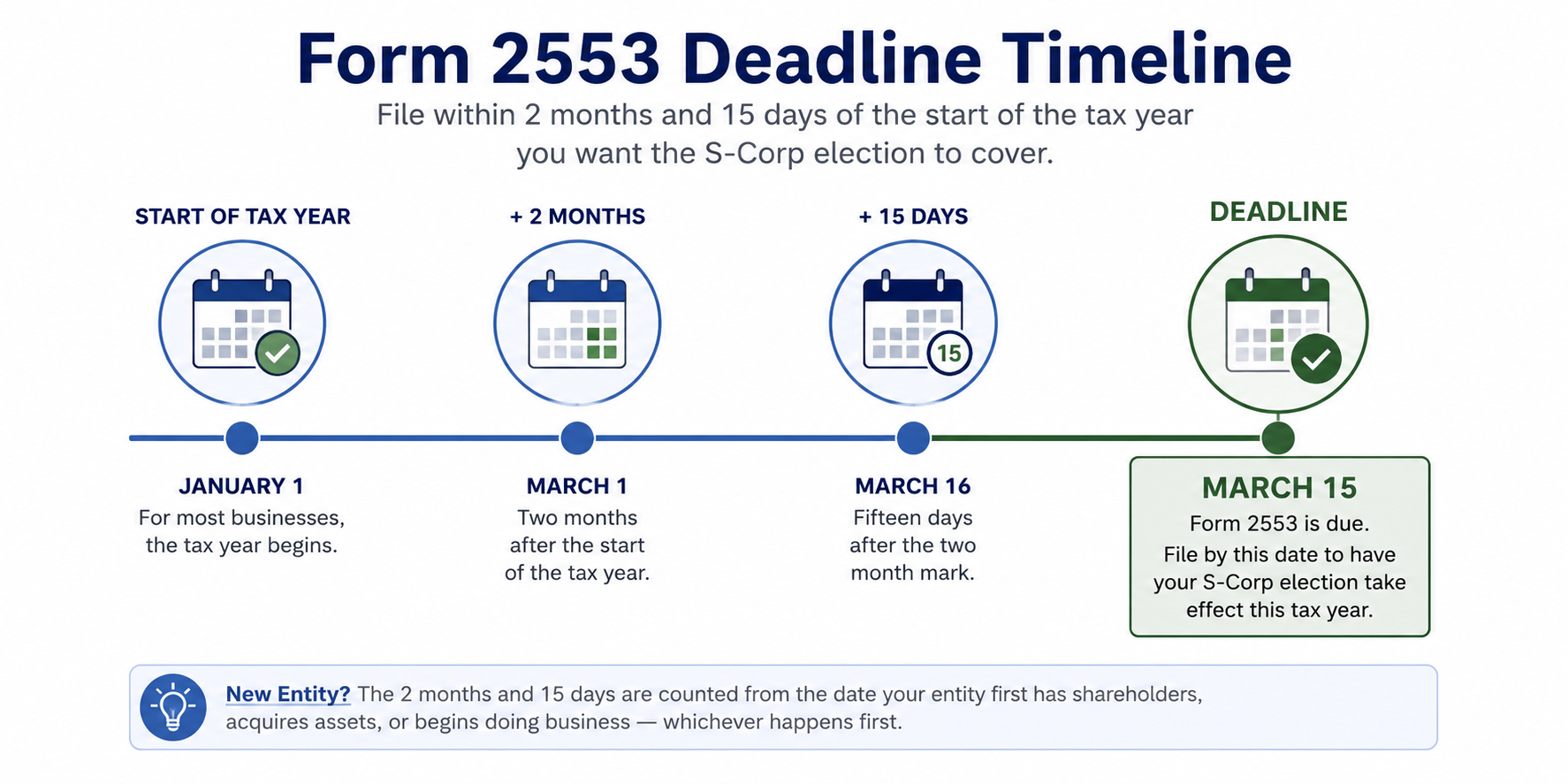
For a calendar-year business that wants S-Corp treatment for the current year, the deadline works out to March 15. A brand-new entity counts the two months and 15 days from the date it first has shareholders, acquires assets, or begins doing business — whichever happens first.
Choosing the right entity structure is one of the most important decisions a business owner makes. SAPIR EA's Business Services help business owners evaluate whether an S-Corp election fits their goals, income level, and long-term plans.
Filing Early Is Fine — and Smart
You can also file Form 2553 at any time during the tax year before the year you want it to apply. If you already know you want S-Corp status next year, filing ahead removes the risk of forgetting in the spring rush.
Many business owners choose to file early simply to remove uncertainty and avoid missing a deadline during busy tax season.
What You Need to File
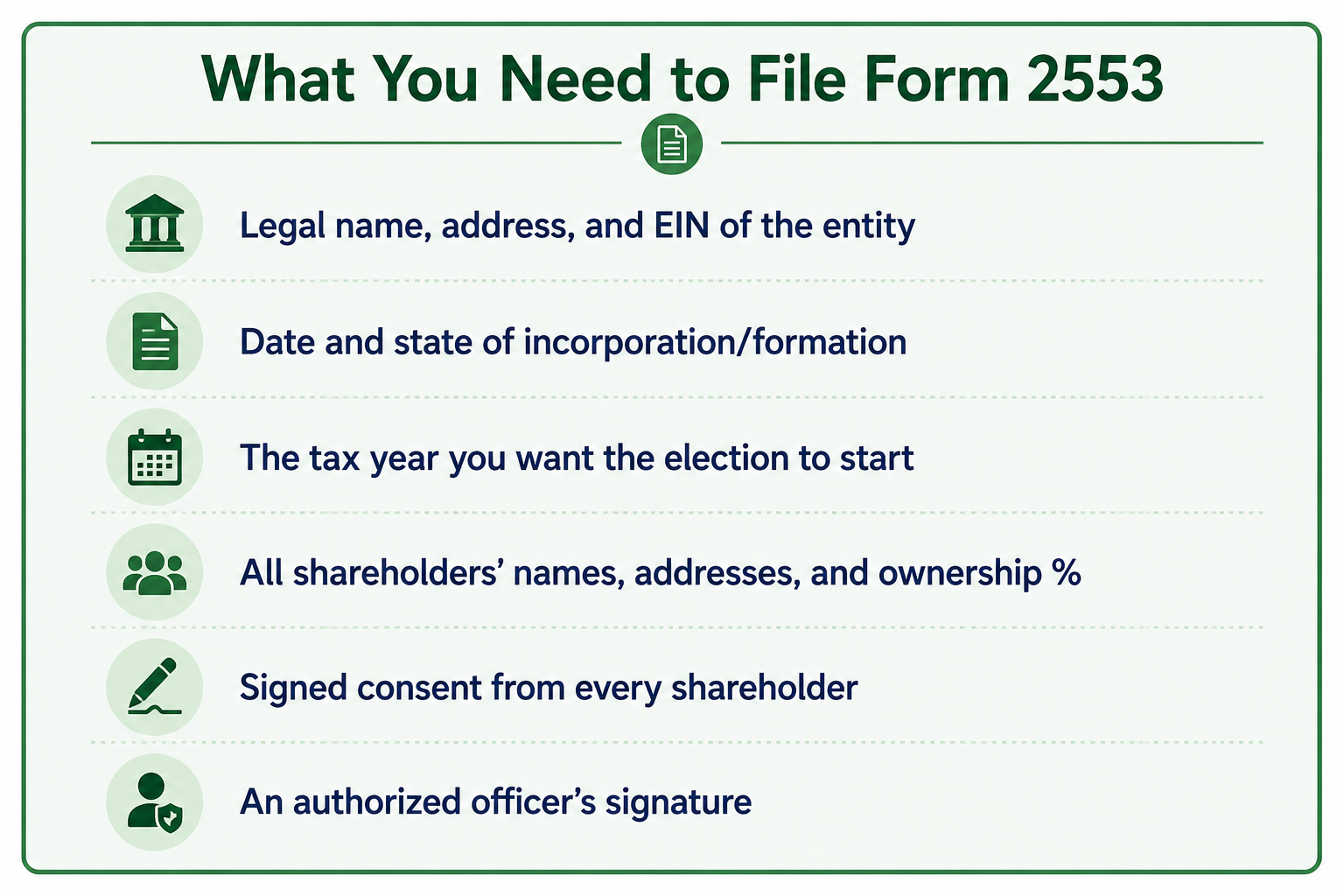
Form 2553 asks for the entity's details, the tax year, and the consent of every shareholder. That last point matters: all shareholders must sign and agree to the election. Missing a signature is one of the most common reasons elections get rejected or delayed.
Make Sure You Qualify First
Not every business can be an S-Corp. Before filing, confirm the basic eligibility rules.
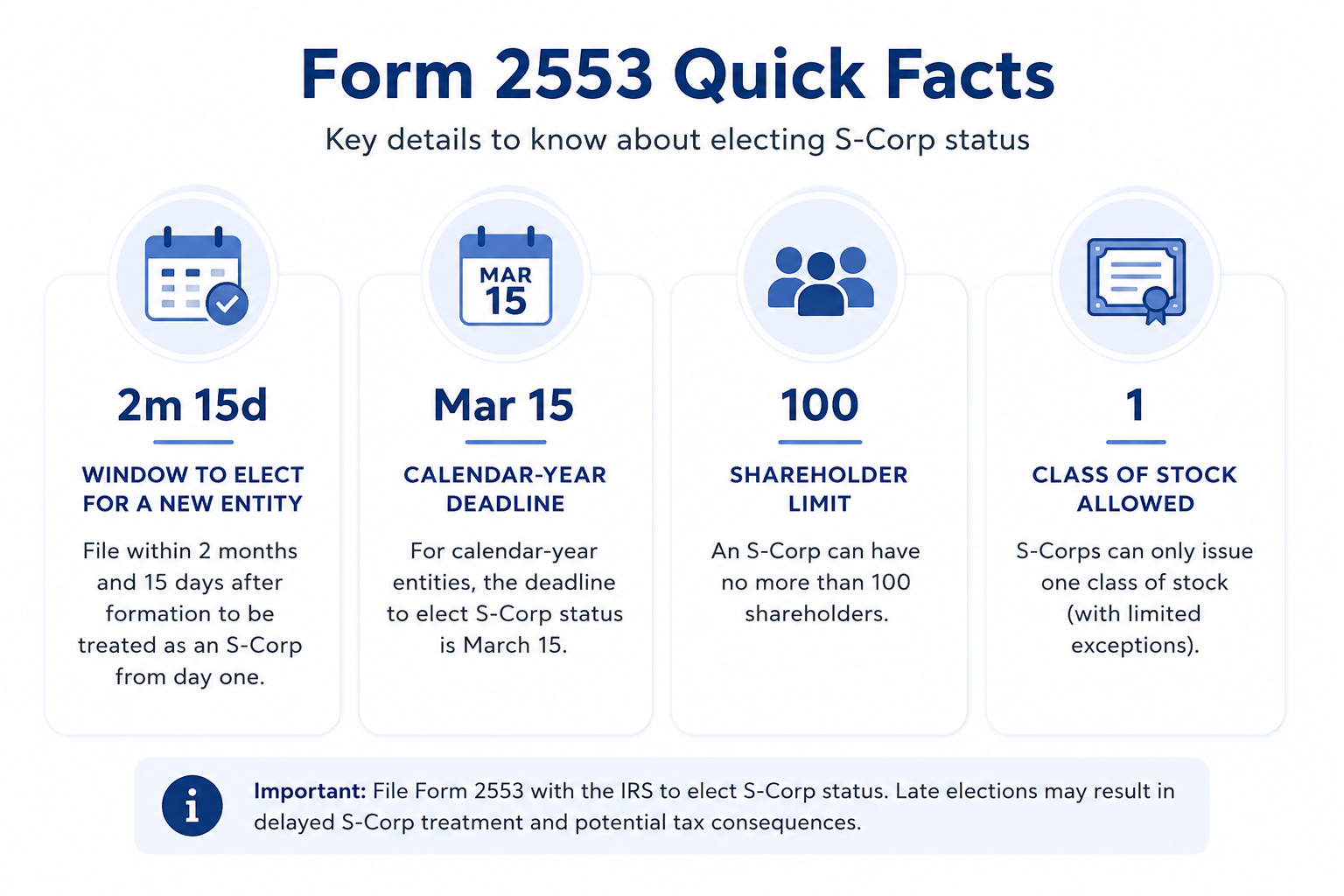
- The entity must be a domestic corporation or eligible LLC.
- It can have no more than 100 shareholders.
- Shareholders must generally be U.S. individuals, certain trusts, or estates.
- It can have only one class of stock.
Key Takeaway
File Form 2553 within 2 months and 15 days of the start of your target tax year — March 15 for calendar-year businesses — with every shareholder's signed consent.
The Bottom Line
The S-Corp election is powerful, but it is also deadline-driven. Mark the date, gather shareholder consents early, and file Form 2553 before the window closes.
If you have already missed it, do not assume the door is shut — the IRS offers late-election relief in many cases, which we cover in a separate guide.
If you are unsure whether an S-Corp election makes sense, our Business Services team can review your entity structure, compensation strategy, and projected income to determine whether the tax savings justify the change.
Need Help With Your S-Corp Election?
Whether you're forming a new business or considering switching entity structures, SAPIR EA can help you determine eligibility, prepare the paperwork, and make sure deadlines are met.
Contact UsThis article is general educational information, not individualized tax, legal, or financial advice. Tax rules change and depend on your specific facts. Please consult a qualified professional before acting.