Year-End Tax Planning for Profitable LLC Owners: What to Review (2026)
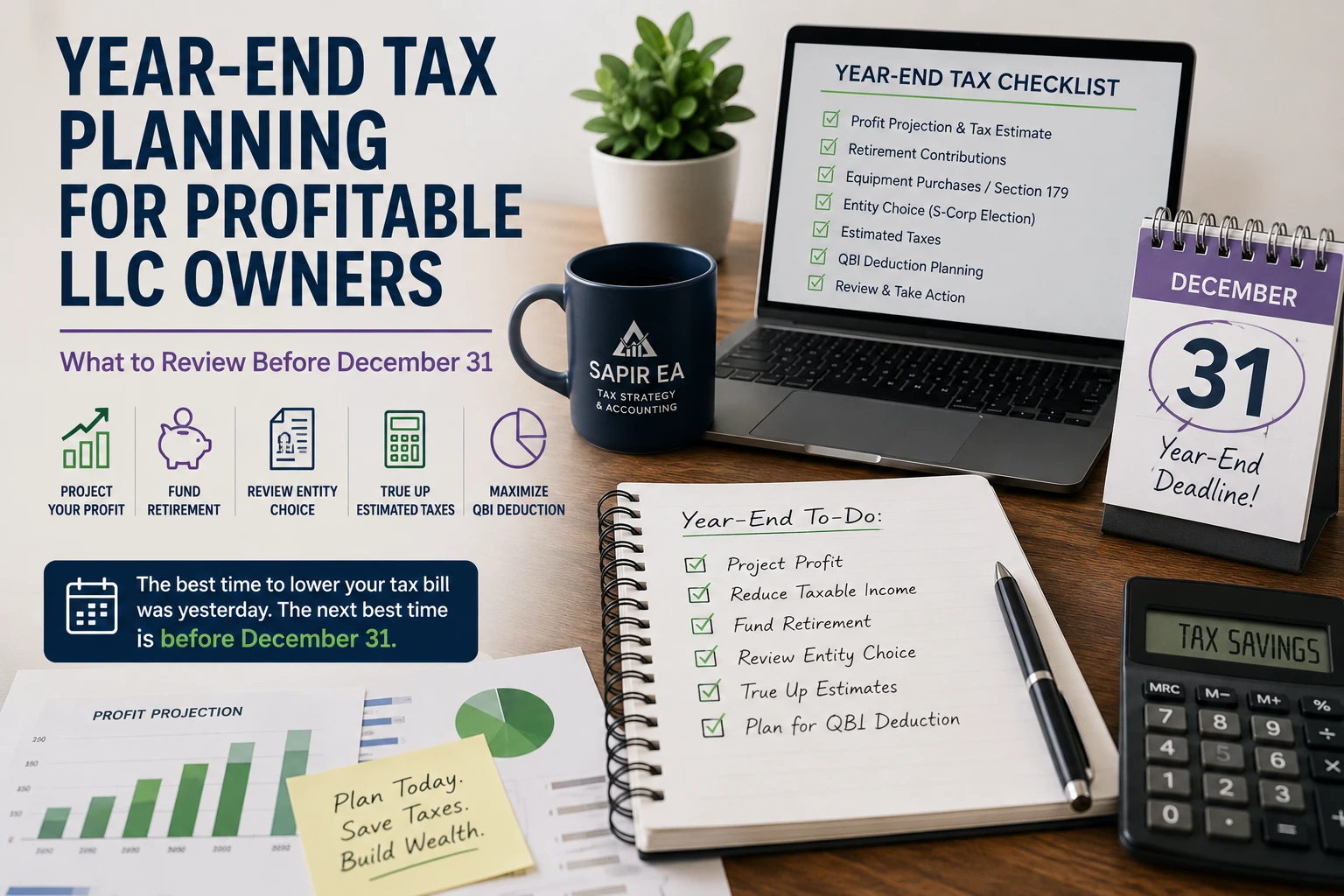
For a profitable LLC, the months before year-end are the
best window to lower your tax bill. Once the calendar flips, most opportunities
are gone. This guide covers what to review before December 31 so you walk into
filing season with no regrets and no surprises.
Year-end planning is not about gimmicks. It is about looking
at your real numbers in time to act — funding retirement, timing purchases,
checking your entity choice, and making sure your estimated taxes are on track.
Start With a Profit Projection
Everything begins with a realistic estimate of your
full-year profit and the tax it will generate. Without that number, every other
decision is a guess. Pull your year-to-date books, project the rest of the
year, and estimate where your taxable income will land.
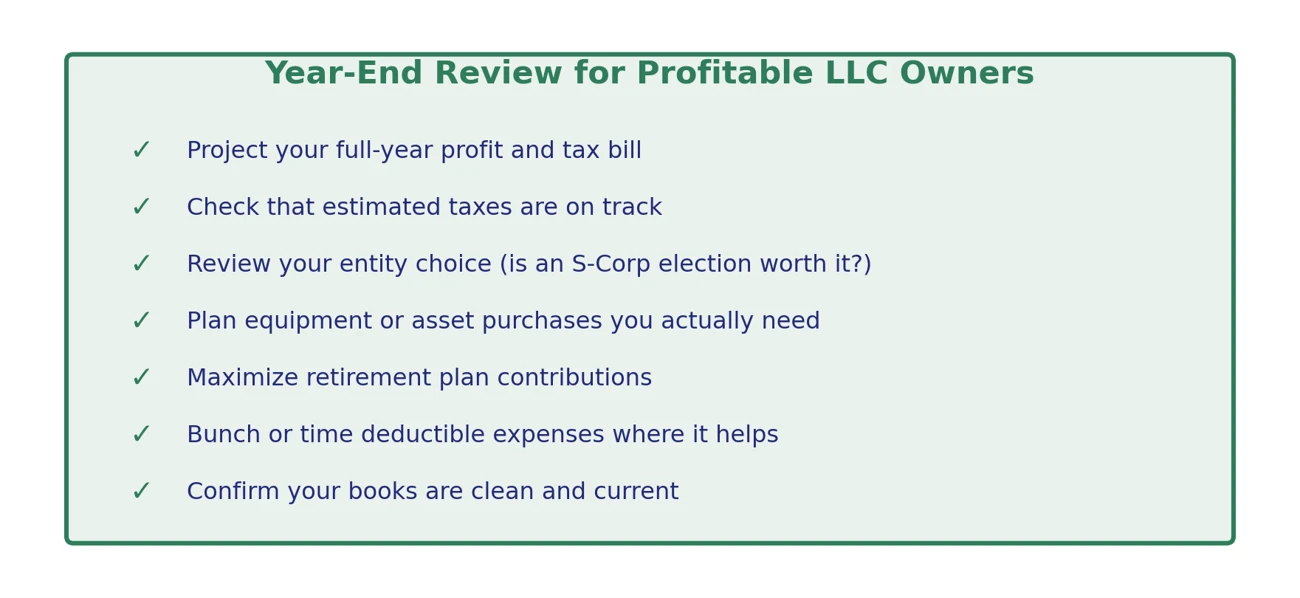
That projection tells you two things: whether your estimated
tax payments are sufficient, and how much room you have for year-end moves that
reduce taxable income.
Strategies Worth Reviewing
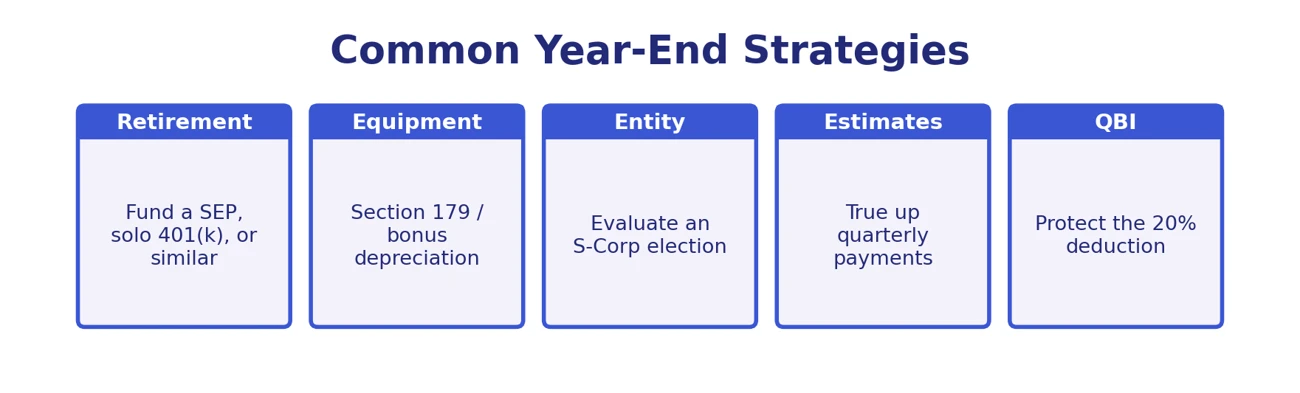
Retirement contributions are often the biggest lever — plans
like a SEP-IRA or solo 401(k) can shelter a meaningful share of profit, and
some can be funded after year-end but must be established in time. Needed
equipment purchases may qualify for immediate expensing. And if your profit has
grown, it may be time to revisit whether an S-Corp election would save on
self-employment tax next year.
Don’t Forget Estimated Taxes and QBI
A profitable year can leave you underpaid on estimated
taxes, which leads to penalties. Year-end is the time to true up. It is also
worth checking how your income interacts with the qualified business income
(QBI) deduction, since the right planning can help preserve that valuable
break.
Give Yourself Time to Act
·
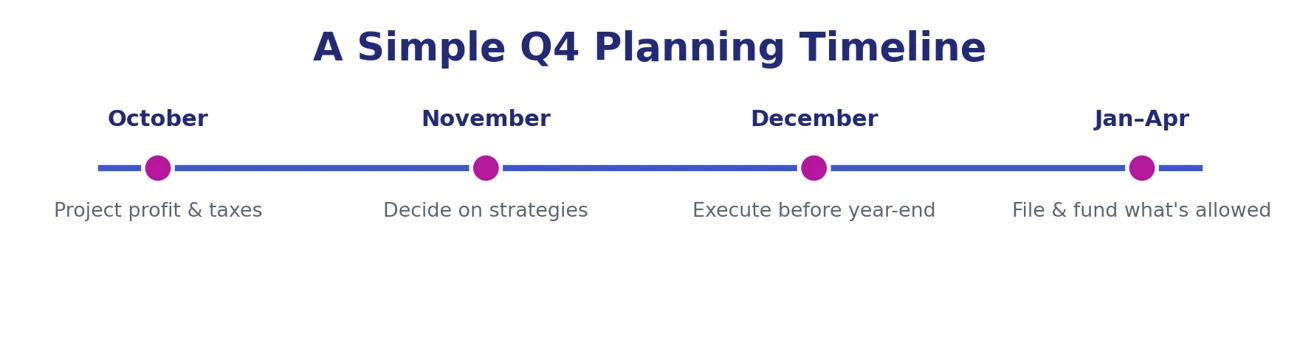
Plan in
the fall. Project profit in October so you have time to make decisions.
·
Act
before December 31. Most income-tax moves must be done within the tax year.
·
Keep
books current. Clean numbers make every decision easier and more accurate.
·
Coordinate
the pieces. Retirement, entity choice, and estimates all affect one
another.
|
Key takeaway: Profitable LLC owners save the most by
planning before December 31: project your profit, fund retirement, time
purchases, revisit your entity choice, and true up estimated taxes. |
The Bottom Line
The difference between a good tax outcome and an expensive
one is often decided in the fourth quarter. A focused year-end review — built
on a solid profit projection — lets you make deliberate choices instead of
scrambling in April. If your LLC had a strong year, a short planning session
before December 31 is one of the highest-return hours you can spend.
|
Work with Sapir EA Have questions about your situation?
Schedule a 30-minute consultation at calendly.com/andrey-sapir/30min, call
267-386-7911, or visit sapirea.com. We help business owners and individuals
nationwide with tax preparation, planning, and bookkeeping. |
Disclaimer:
This article is general educational information, not individualized tax, legal,
or financial advice. Tax rules change and depend on your specific facts. Please
consult a qualified professional before acting. Sapir EA • 2370 York Road,
Suite G1 #357, Jamison, PA 18929 • 267-386-7911.