S-Corp Salary vs Distributions: What Owners Need to Know (2026)
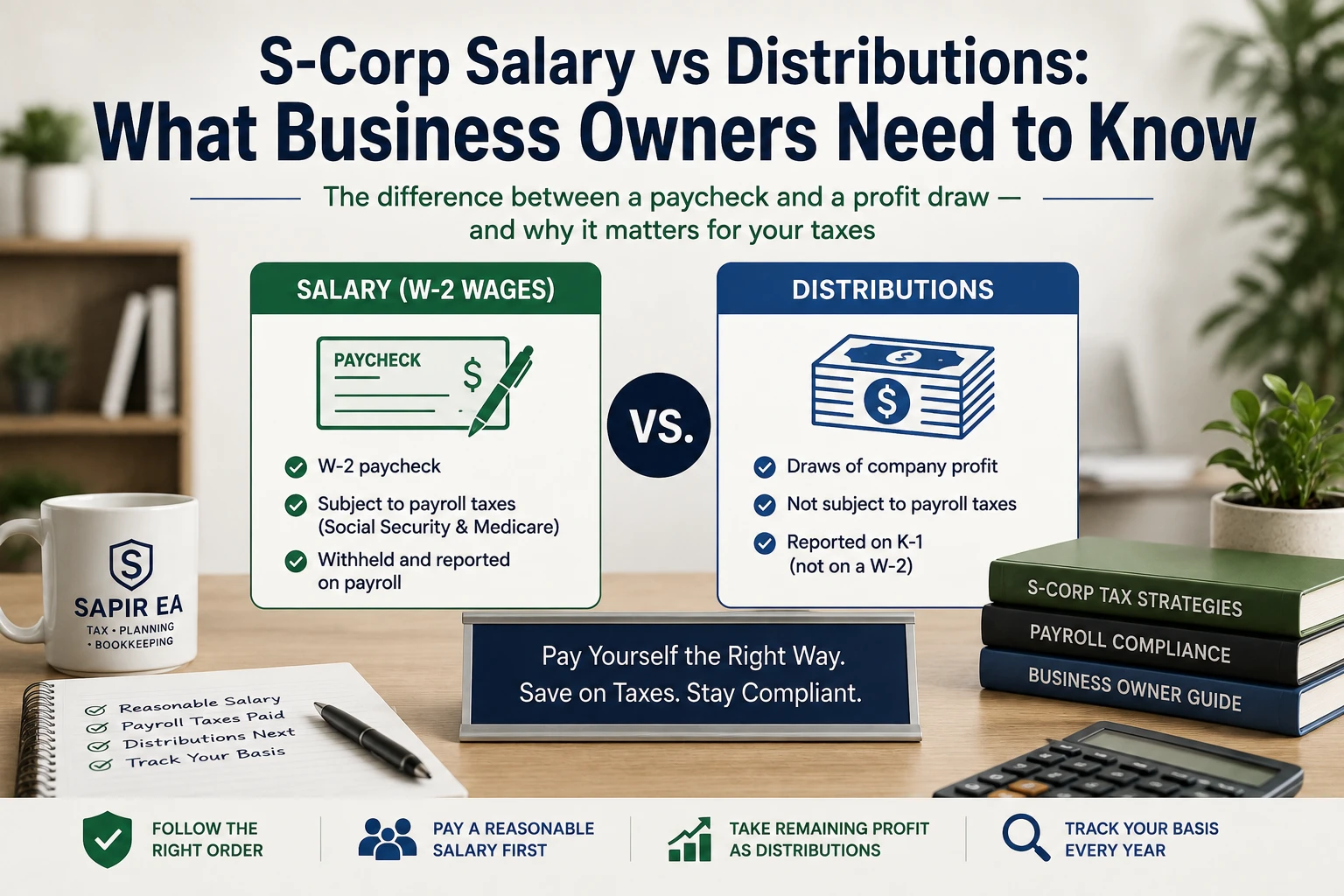
For S-Corp owners, two words drive most of the tax outcome:
salary and distributions. They are taxed differently, reported differently, and
getting the balance right is what makes the S-Corp worthwhile. Here is what
every owner should understand about the two.
In short, your salary is a W-2 paycheck that carries payroll
tax, while distributions are draws of company profit that do not. Both can be
legitimate; the key is taking them in the right order and the right amounts.
Two Ways Money Leaves an S-Corp
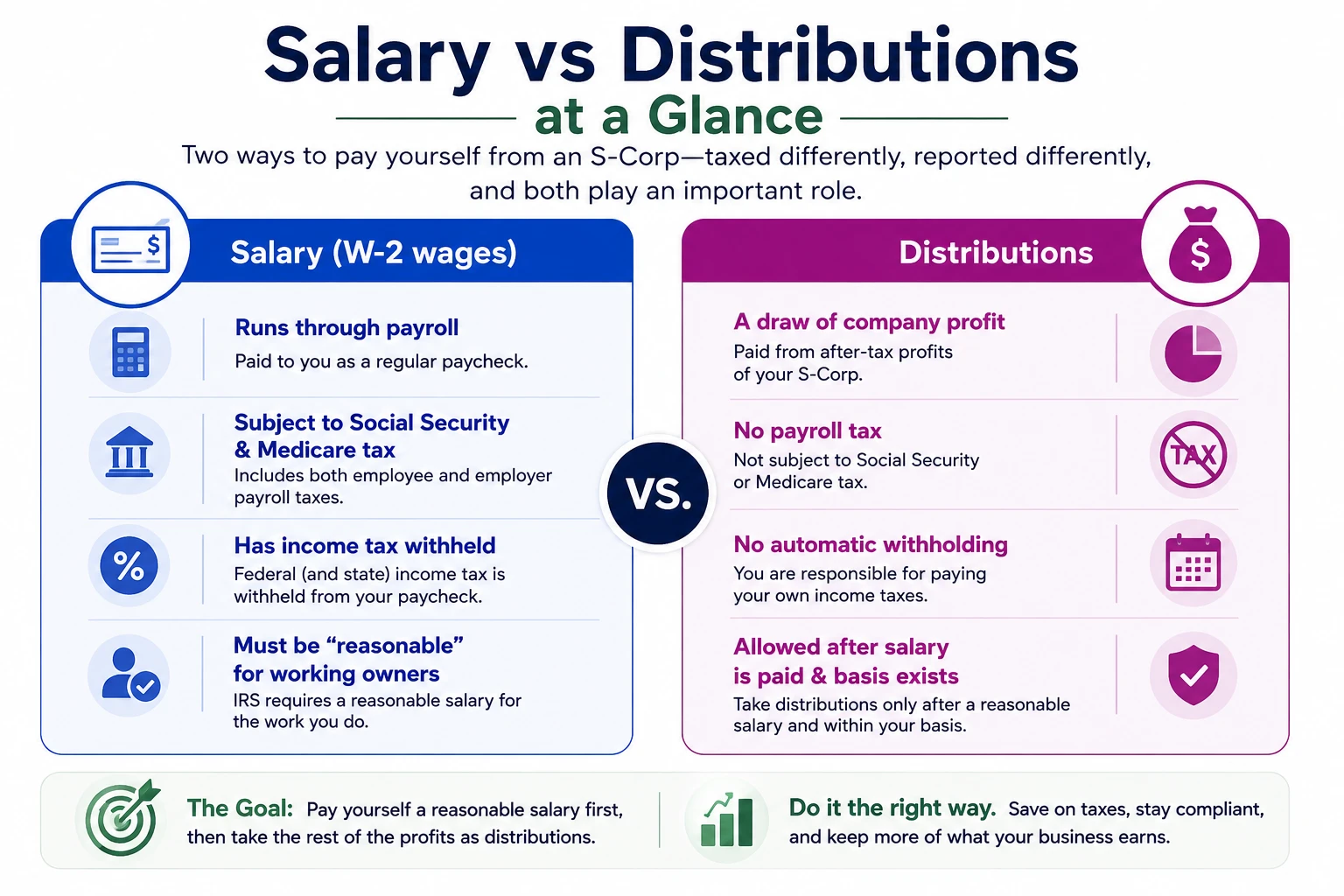
When you take money out of your S-Corp, it is generally
either wages or a distribution. Wages run through payroll and are subject to
Social Security and Medicare taxes. Distributions are simply your share of the
company’s profit paid out to you, and they are not subject to payroll tax.
Why the IRS Cares About the Split
Because distributions avoid payroll tax, owners have an
incentive to label as much pay as possible a distribution. The IRS counters
this by requiring working owners to take reasonable compensation as salary
first. Only after you are reasonably paid should the rest come out as
distributions.
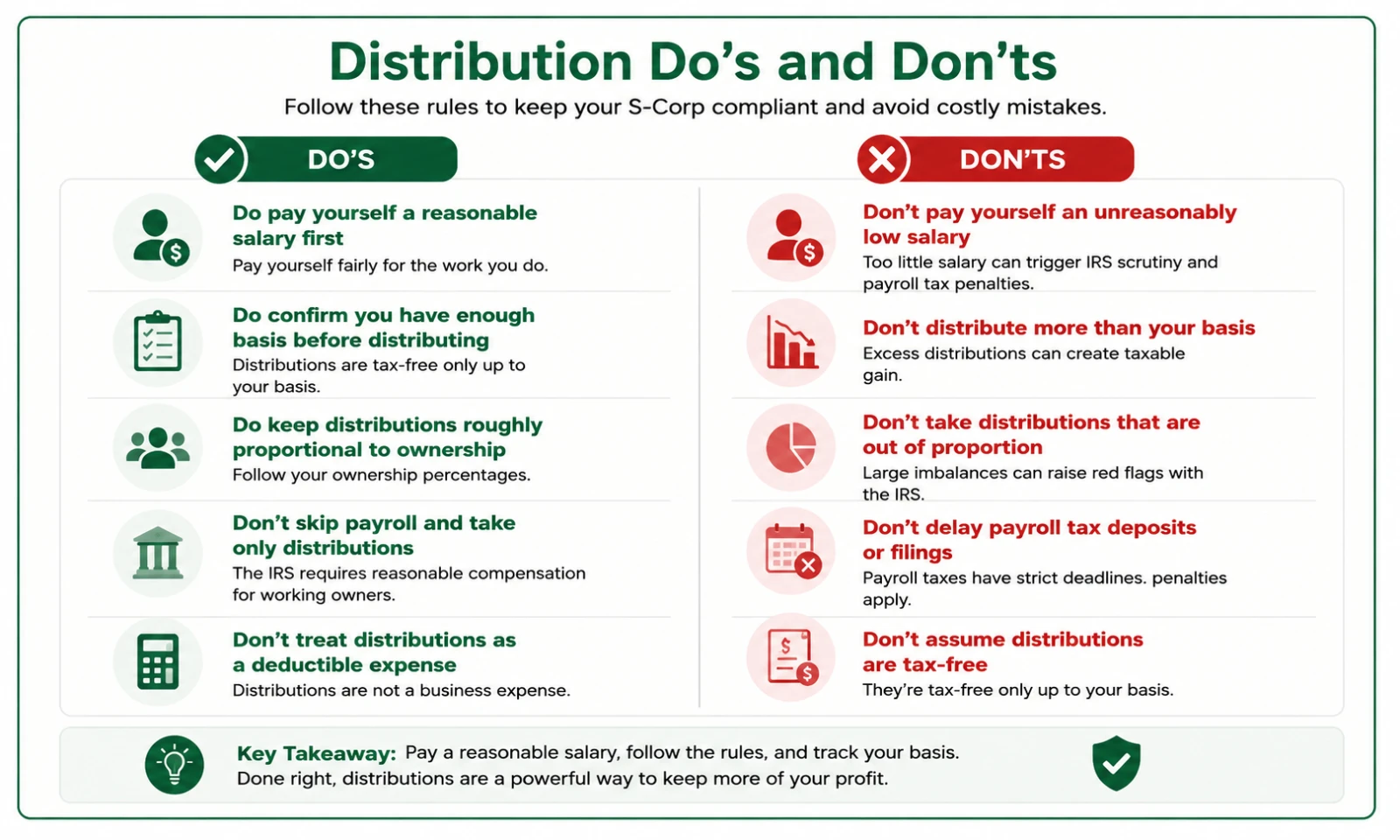
Skipping salary entirely and taking only distributions is
one of the fastest ways to draw IRS attention to an S-Corp.
The Right Order to Pay Yourself
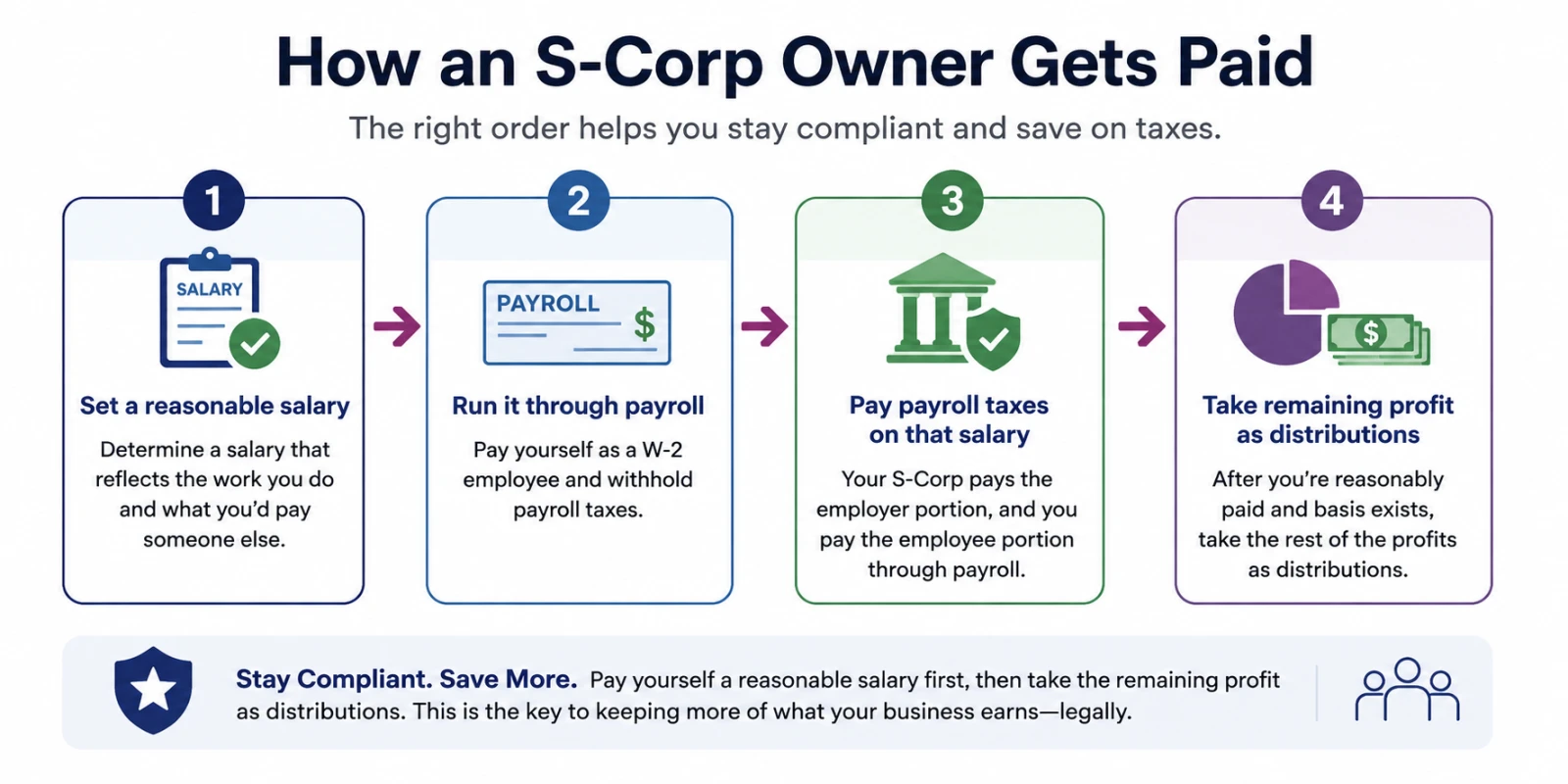
The sequence matters. Set a reasonable salary based on the
work you do, run it through payroll so the proper taxes are withheld and paid,
and then take additional profit as distributions. Doing it in this order keeps
your books clean and your position defensible.
One More Concept: Basis
Distributions are generally tax-free only to the extent of
your basis — essentially your investment in the company plus profits already
taxed to you, less prior distributions. Taking distributions beyond your basis
can create an unexpected taxable gain, so it is worth tracking basis each year.
|
Key takeaway: Salary is taxed for payroll;
distributions are not. Pay yourself a reasonable salary first, then take
remaining profit as distributions — and keep an eye on your basis. |
The Bottom Line
The salary-versus-distribution balance is the heart of
S-Corp tax planning. Pay yourself fairly for the work you do, take the rest as
distributions, and track your basis so there are no surprises. Handled
correctly, this split is exactly what lets an S-Corp owner keep more of the
company’s profit — legally and cleanly.
|
Work with Sapir EA Have questions about your situation?
Schedule a 30-minute consultation at calendly.com/andrey-sapir/30min, call
267-386-7911, or visit sapirea.com. We help business owners and individuals
nationwide with tax preparation, planning, and bookkeeping. |
Disclaimer:
This article is general educational information, not individualized tax, legal,
or financial advice. Tax rules change and depend on your specific facts. Please
consult a qualified professional before acting. Sapir EA • 2370 York Road,
Suite G1 #357, Jamison, PA 18929 • 267-386-7911.