S-Corp Reasonable Compensation: How Much Salary Should You Take? (2026)
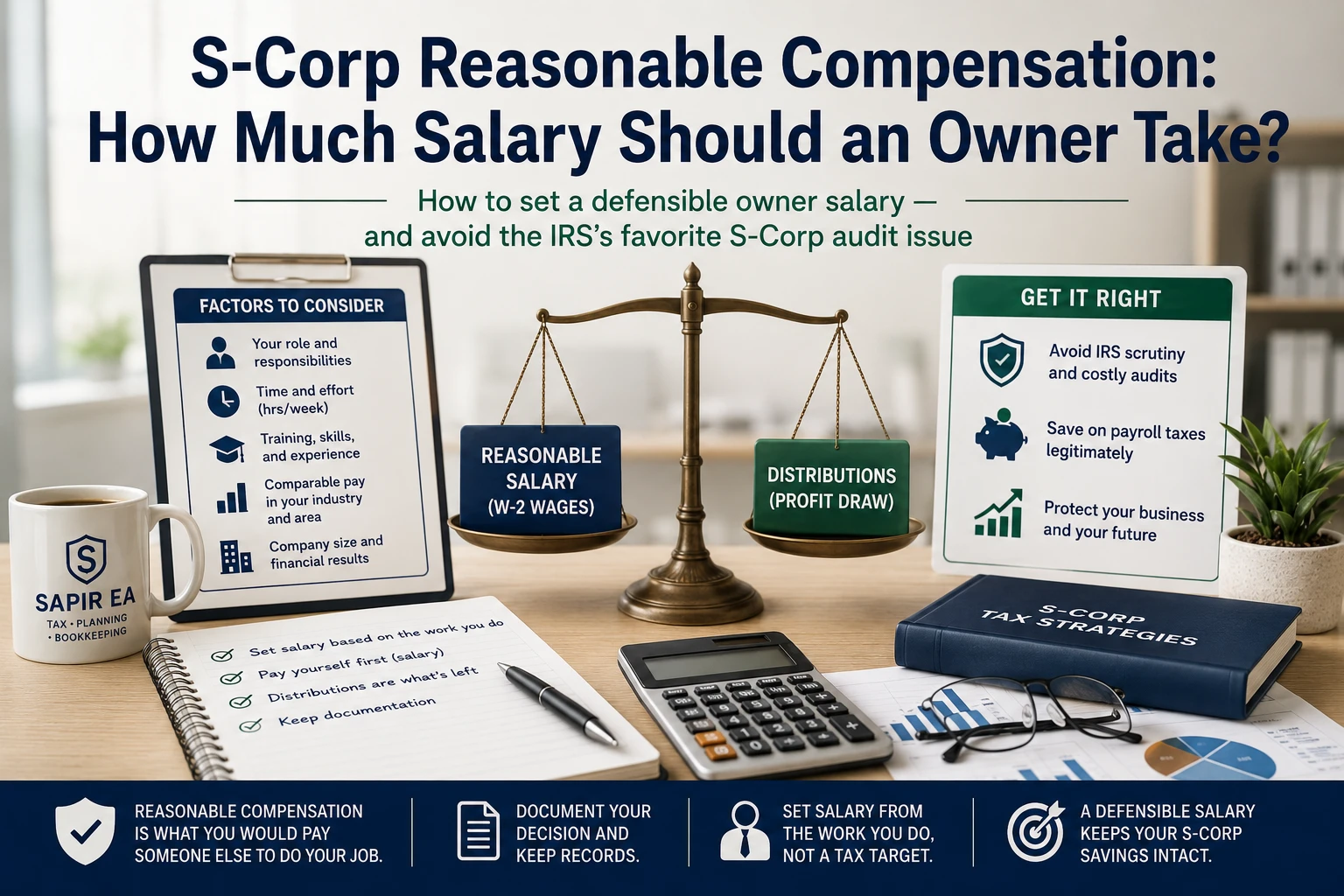
If you run an S-Corp, the single most important number on your return might be your own salary. Pay yourself too much and you hand over extra payroll tax. Pay yourself too little and you invite an IRS challenge. This guide explains what reasonable compensation means and how to land on a number you can defend.
There is no magic formula or fixed percentage in the law.
Reasonable compensation means what you would have to pay someone else to do
your job — and the IRS expects S-Corp owners who actively work in the business
to take it before distributions.
Why This Number Matters So Much
S-Corp owners save on self-employment tax by taking part of
their pay as distributions, which are not subject to payroll tax. That creates
a natural temptation to set the salary as low as possible. The IRS knows this,
and underpaying owner salary is one of the most commonly examined S-Corp
issues.
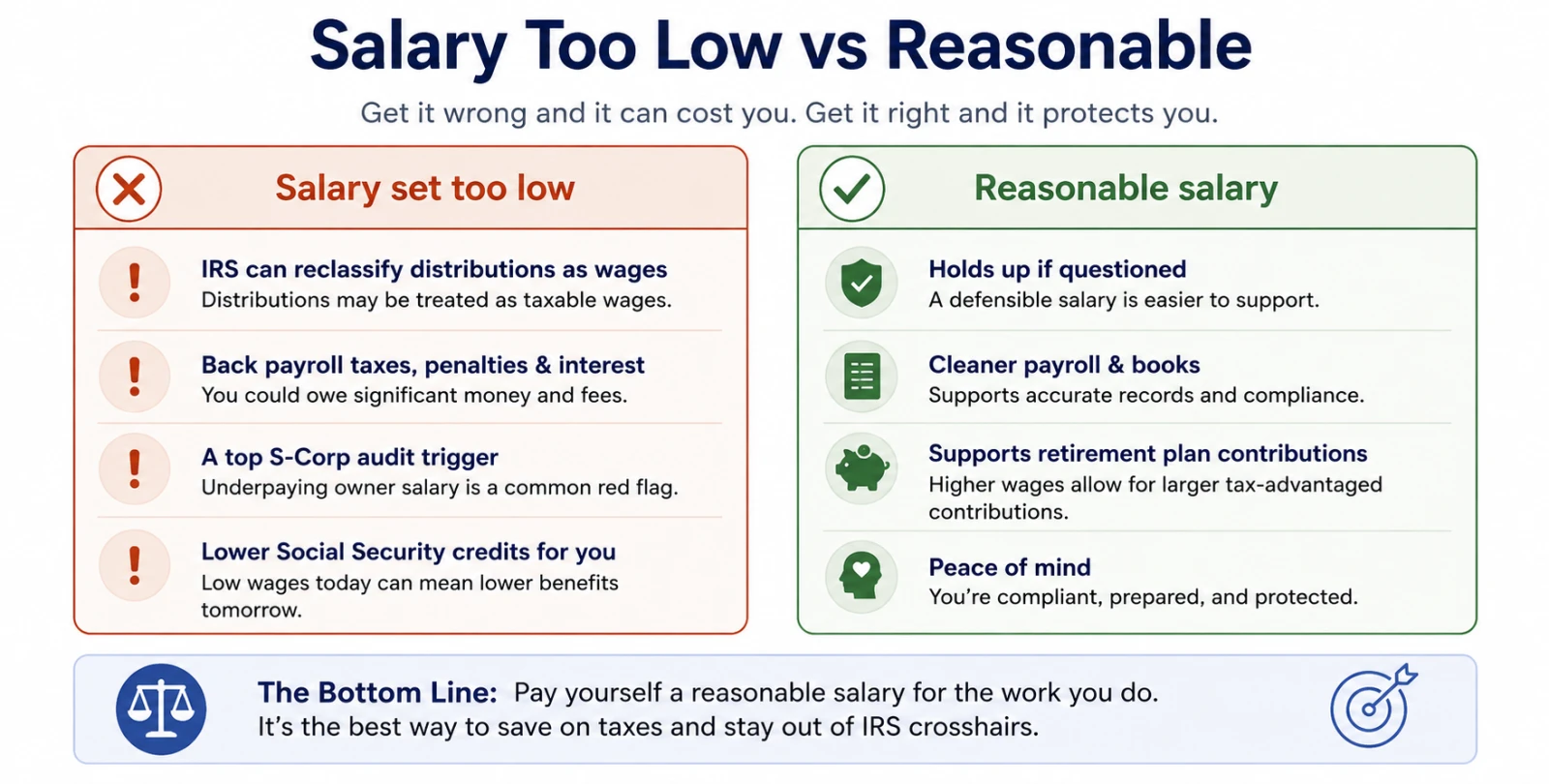
If the IRS decides your salary was unreasonably low, it can
reclassify distributions as wages and assess back payroll taxes, penalties, and
interest. A reasonable salary protects you from that.
What ’Reasonable’ Actually Means
The IRS looks at the facts and circumstances of your role.
In practice, that means weighing several factors rather than applying one rule.
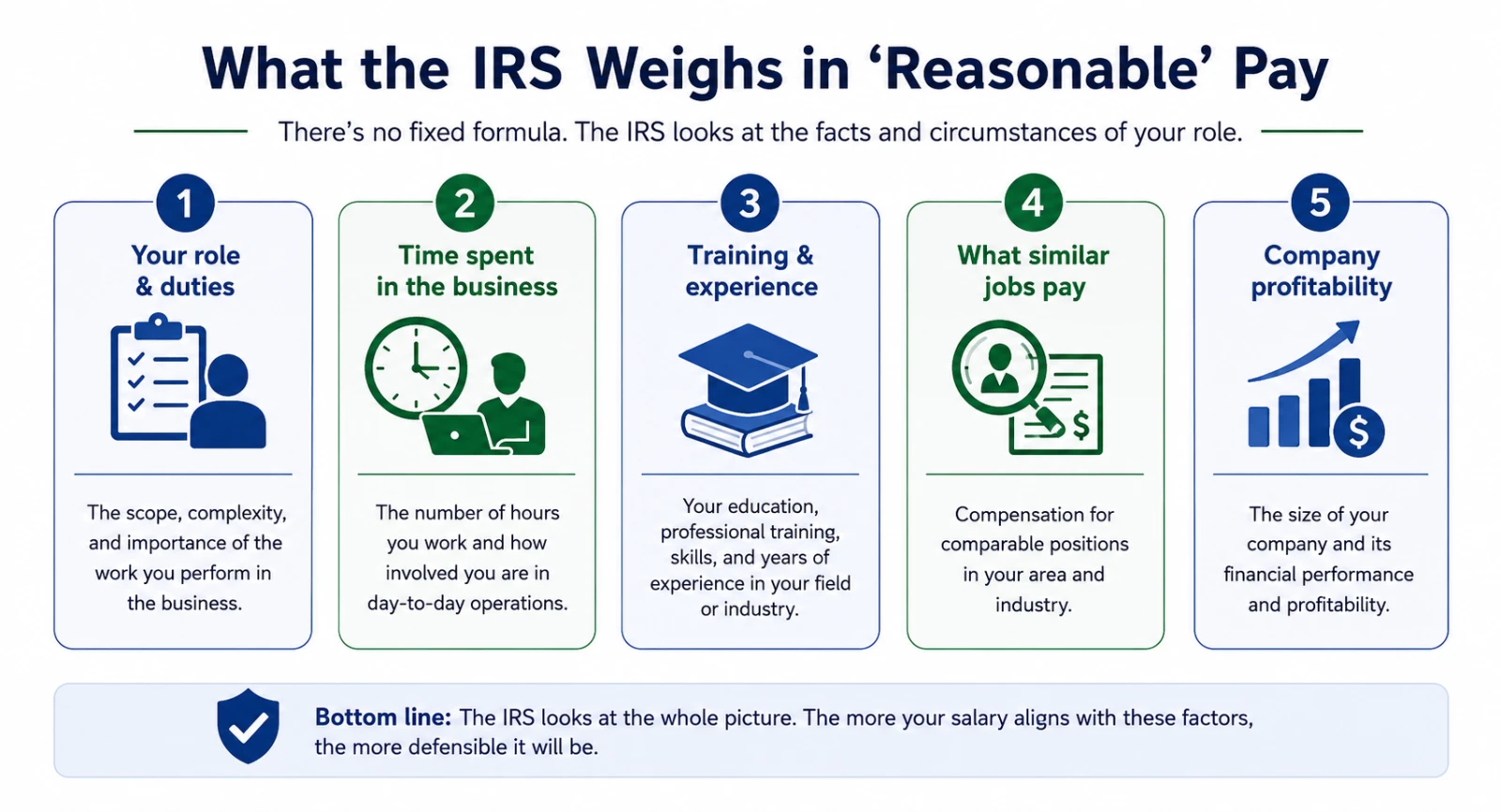
Think about what you actually do in the business, how many
hours you put in, your training and experience, and what comparable positions
pay in your area and industry. An owner who is the firm’s main rainmaker and
works full time should be paid very differently from one who plays a limited,
part-time role.
A Practical Way to Set It
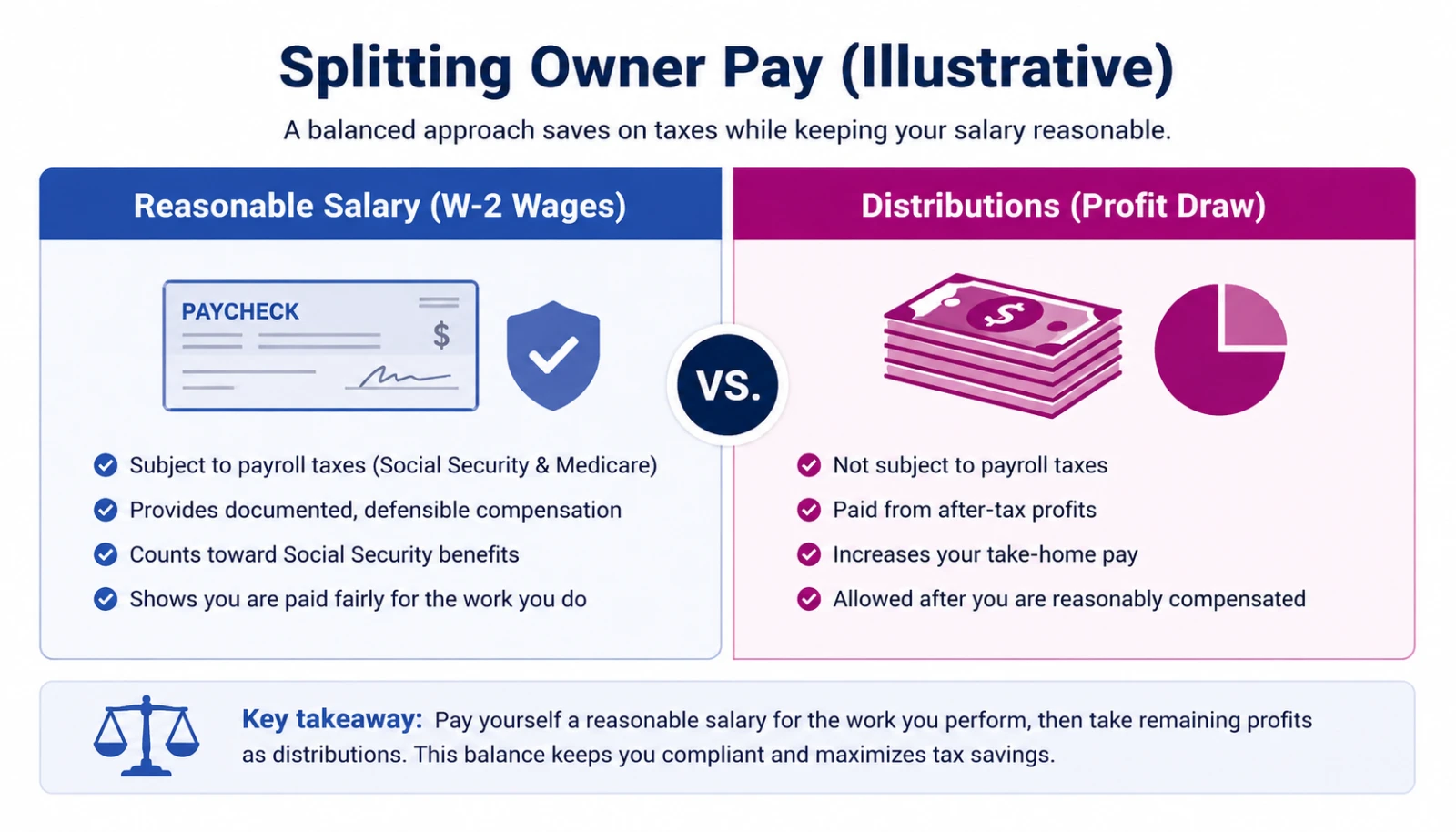
A clean approach is to set the salary first, based on the
work you perform, and treat distributions as whatever is left over — not the
other way around. Starting from the job, not from a tax target, is exactly the
logic that holds up if you are ever questioned.
Useful sources of support include compensation surveys,
job-board data for similar roles, and reasonable-compensation reports. Whatever
you use, keep a written record of how you arrived at the figure.
The Cost of Getting It Wrong
·
Too low: risk
of reclassification, back taxes, penalties, and reduced Social Security
benefits down the road.
·
Too high:
you simply pay more payroll tax than necessary, giving up part of the
S-Corp advantage.
·
Just
right: a defensible number, supported by documentation, that leaves room
for tax-efficient distributions.
|
Key takeaway: Reasonable compensation is what you would
pay someone else to do your job. Set the salary from the work you actually
perform, document your reasoning, and let distributions be what remains. |
The Bottom Line
There is no one-size-fits-all salary for an S-Corp owner.
The right number reflects your role, your hours, your industry, and your
company’s results — backed by documentation you can point to. Getting it right
keeps your S-Corp savings intact and keeps the IRS at arm’s length. When in
doubt, a quick review with a tax professional is far cheaper than fixing a
reclassification later.
|
Work with Sapir EA Have questions about your situation?
Schedule a 30-minute consultation at calendly.com/andrey-sapir/30min, call
267-386-7911, or visit sapirea.com. We help business owners and individuals
nationwide with tax preparation, planning, and bookkeeping. |
Disclaimer:
This article is general educational information, not individualized tax, legal,
or financial advice. Tax rules change and depend on your specific facts. Please
consult a qualified professional before acting. Sapir EA • 2370 York Road,
Suite G1 #357, Jamison, PA 18929 • 267-386-7911.