QuickBooks Cleanup Before Tax Filing: Why Clean Books Matter (2026)
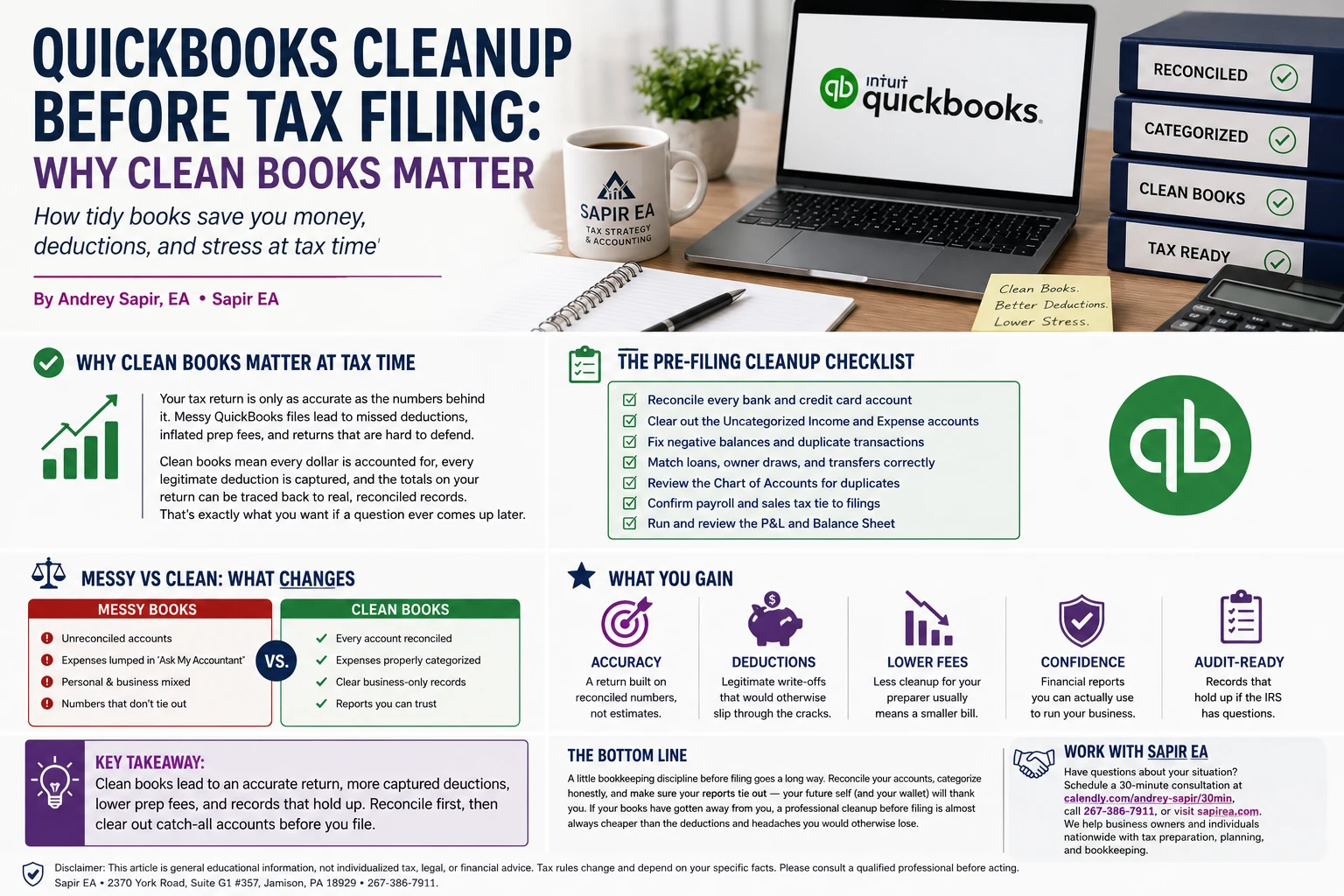
Tax season is far easier — and cheaper — when your books are clean. Messy QuickBooks files lead to missed deductions, inflated prep fees, and returns that are hard to defend. This guide explains why clean books matter and gives you a practical cleanup checklist to run before you file.
Think of bookkeeping cleanup as prep work that pays for
itself: every hour spent tidying your books tends to save money on your return
and your preparer’s bill.
Why Clean Books Matter at Tax Time
Your tax return is only as accurate as the numbers behind
it. If your QuickBooks file is full of uncategorized transactions, unreconciled
accounts, and personal expenses mixed with business ones, your preparer is
either guessing or sending you a long list of questions — and both cost you.
Clean books mean every dollar is accounted for, every
legitimate deduction is captured, and the totals on your return can be traced
back to real, reconciled records. That is exactly what you want if a question
ever comes up later.
The Pre-Filing Cleanup Checklist
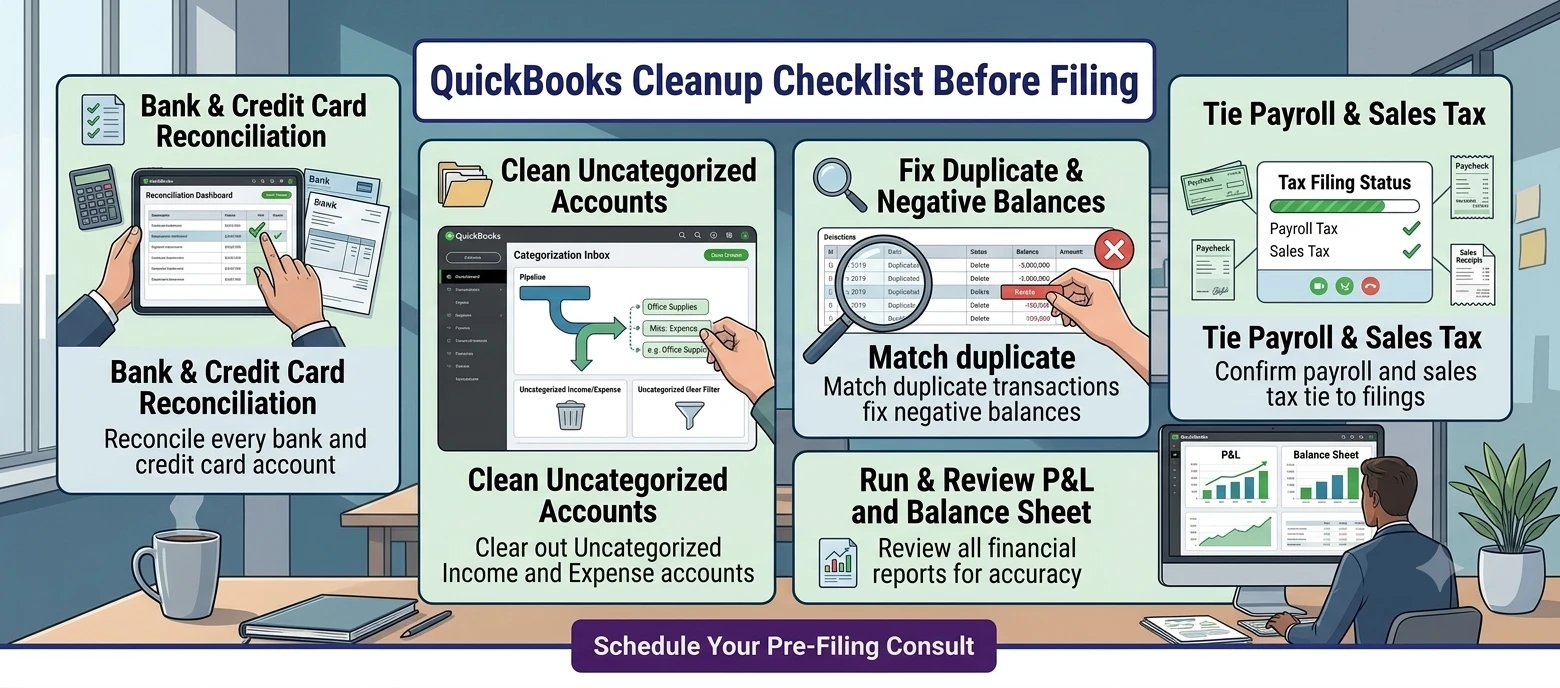
You do not need to be an accountant to make real progress.
Start with reconciliation — matching your QuickBooks balances to your actual
bank and credit card statements — because most other errors surface once
accounts reconcile. Then work through categorization, transfers, and the
financial reports.
Messy vs Clean: What Changes
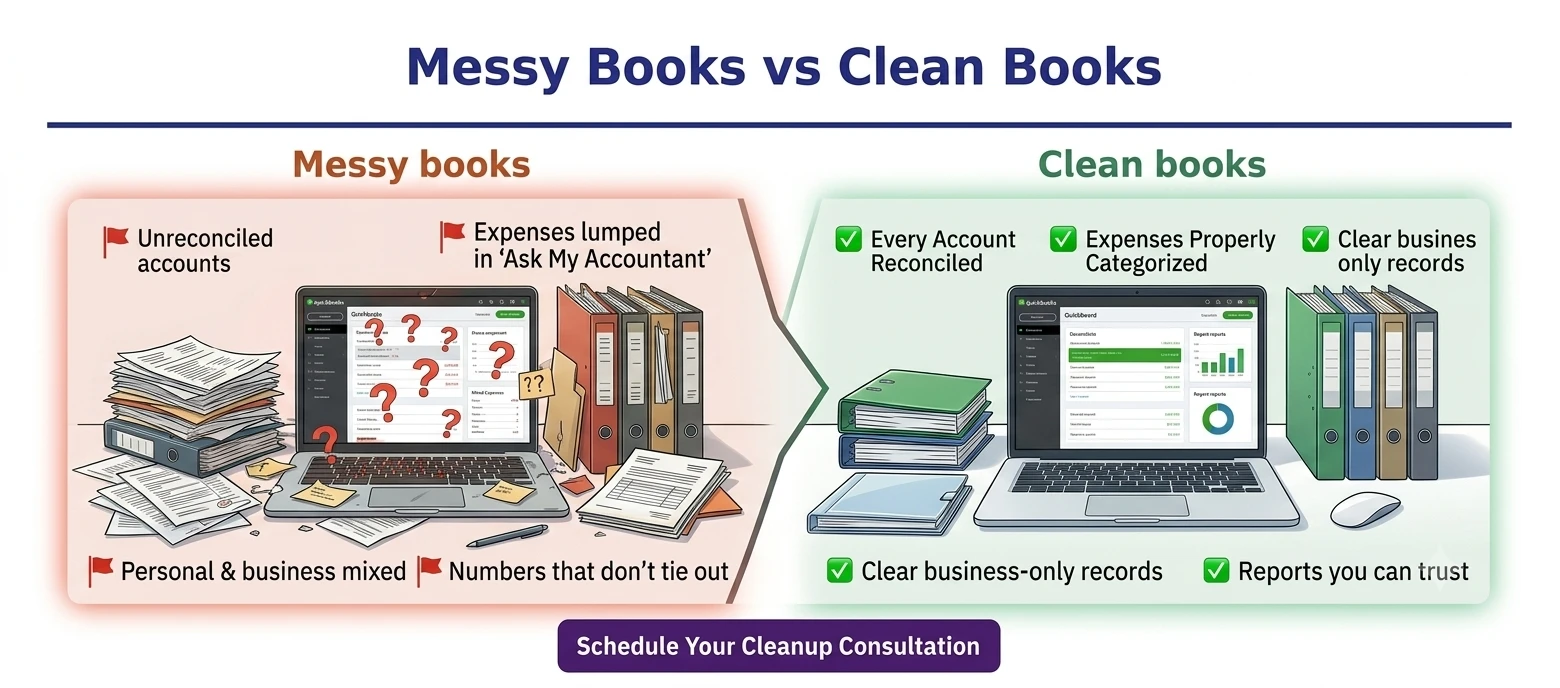
The biggest culprits are usually the catch-all accounts.
Transactions parked in Uncategorized Expense or Ask My Accountant are
deductions waiting to be claimed — or errors waiting to inflate your income.
Clearing these out is often where the real money is found.
What You Gain
·
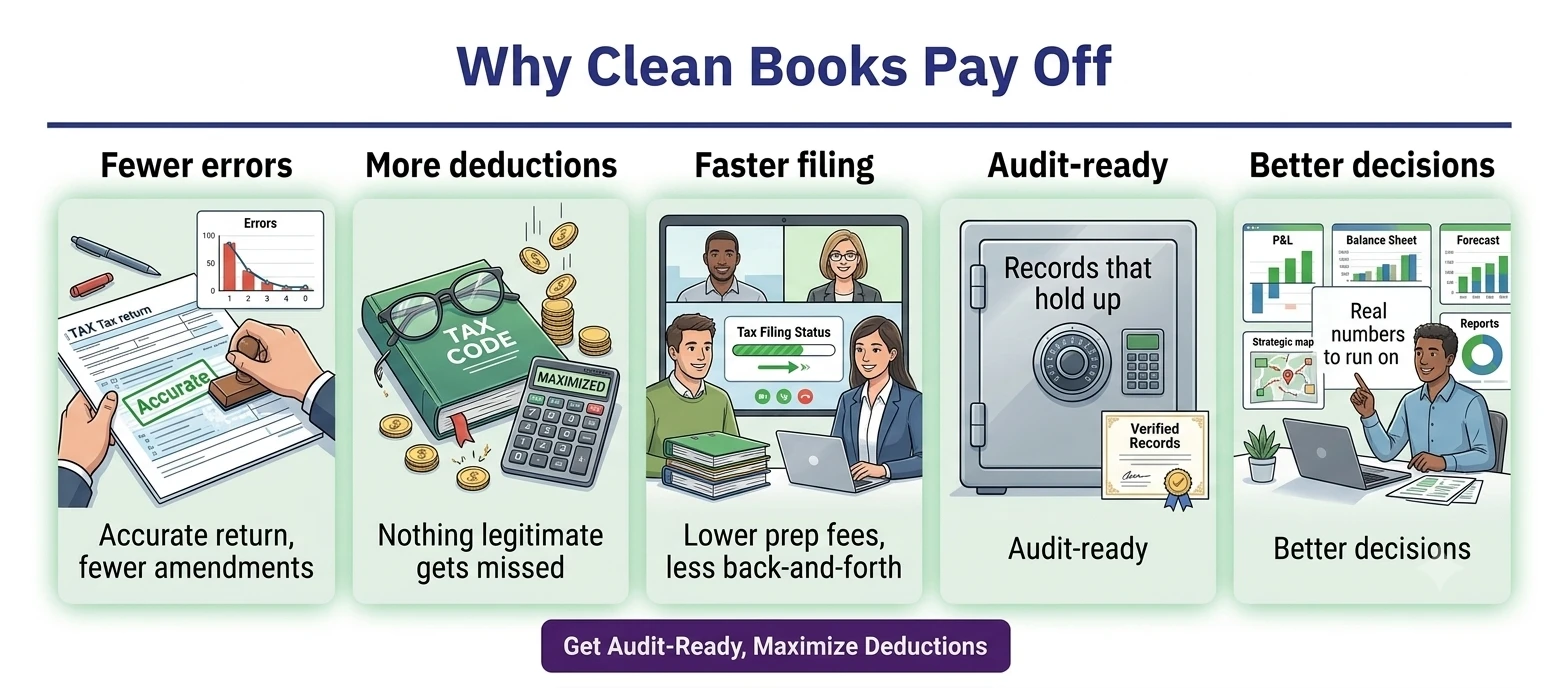
Accuracy.
A return built on reconciled numbers, not estimates.
·
Deductions.
Legitimate write-offs that would otherwise slip through the cracks.
·
Lower
fees. Less cleanup for your preparer usually means a smaller invoice.
·
Confidence.
Financial reports you can actually use to run the business.
|
Key takeaway: Clean books lead to an accurate return,
more captured deductions, lower prep fees, and records that hold up.
Reconcile first, then clear out catch-all accounts before you file. |
The Bottom Line
A little bookkeeping discipline before filing goes a long
way. Reconcile your accounts, categorize honestly, and make sure your reports
tie out — your future self (and your wallet) will thank you. If your books have
gotten away from you, a professional cleanup before filing is almost always
cheaper than the deductions and headaches you would otherwise lose.
|
Work with Sapir EA Have questions about your situation?
Schedule a 30-minute consultation at calendly.com/andrey-sapir/30min, call
267-386-7911, or visit sapirea.com. We help business owners and individuals
nationwide with tax preparation, planning, and bookkeeping. |
Disclaimer:
This article is general educational information, not individualized tax, legal,
or financial advice. Tax rules change and depend on your specific facts. Please
consult a qualified professional before acting. Sapir EA • 2370 York Road,
Suite G1 #357, Jamison, PA 18929 • 267-386-7911.