Multi-State Tax Returns for Remote Workers & Business Owners (2026)
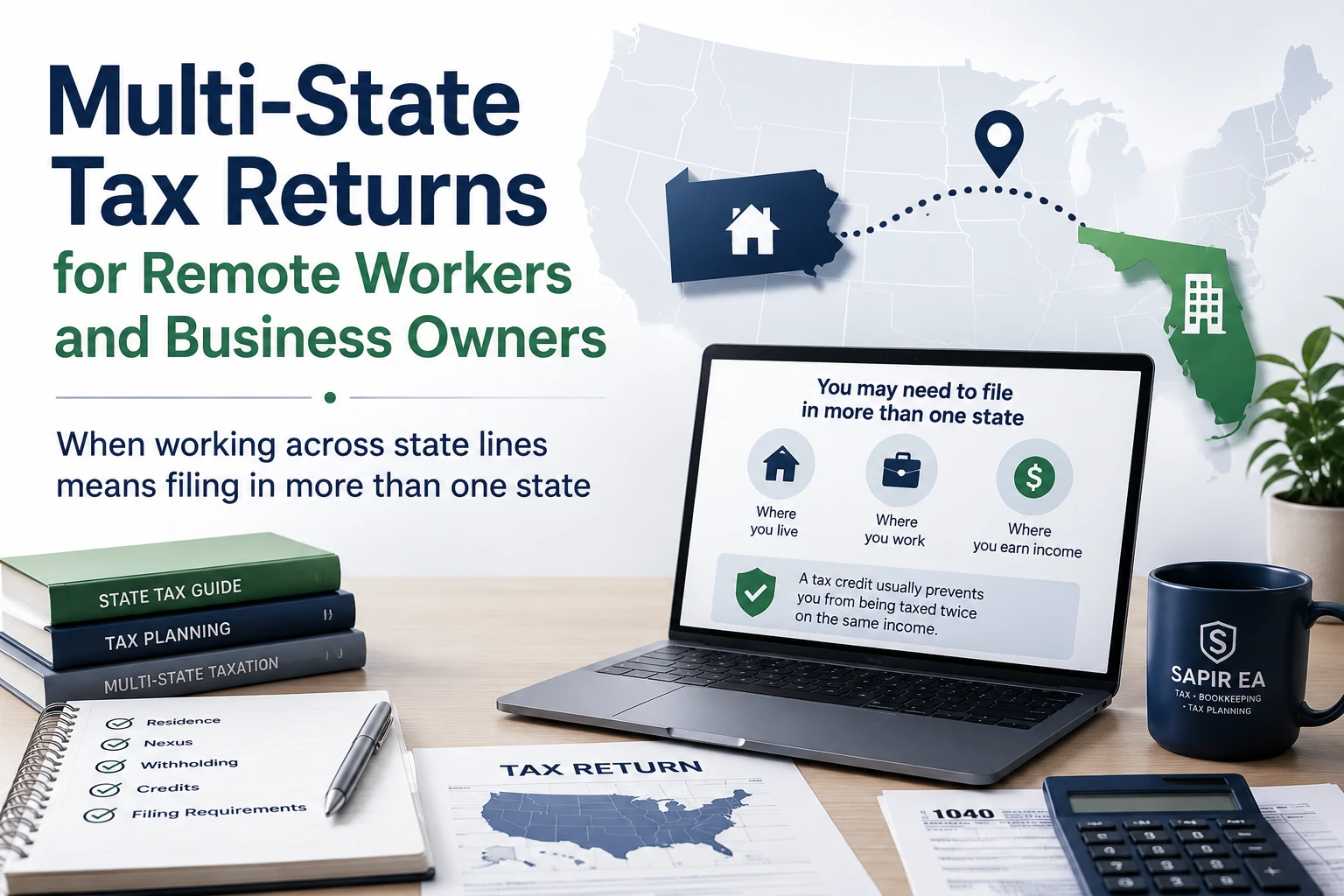
Remote work and online businesses have made multi-state
taxes an everyday issue — not just a concern for big companies. If you live in
one state and earn income connected to another, you may need to file in both.
This guide explains how multi-state returns work and what triggers them.
The core idea: your home state generally taxes all of your
income, while another state can tax the income you earned there. A credit
usually prevents you from being fully taxed twice on the same dollars.
Resident vs Nonresident: The Key Distinction
Your resident state is where you are domiciled — your true,
permanent home. It generally taxes all of your income, no matter where you
earned it. A nonresident state is one where you earned income but do not live;
it can tax only the portion connected to that state.
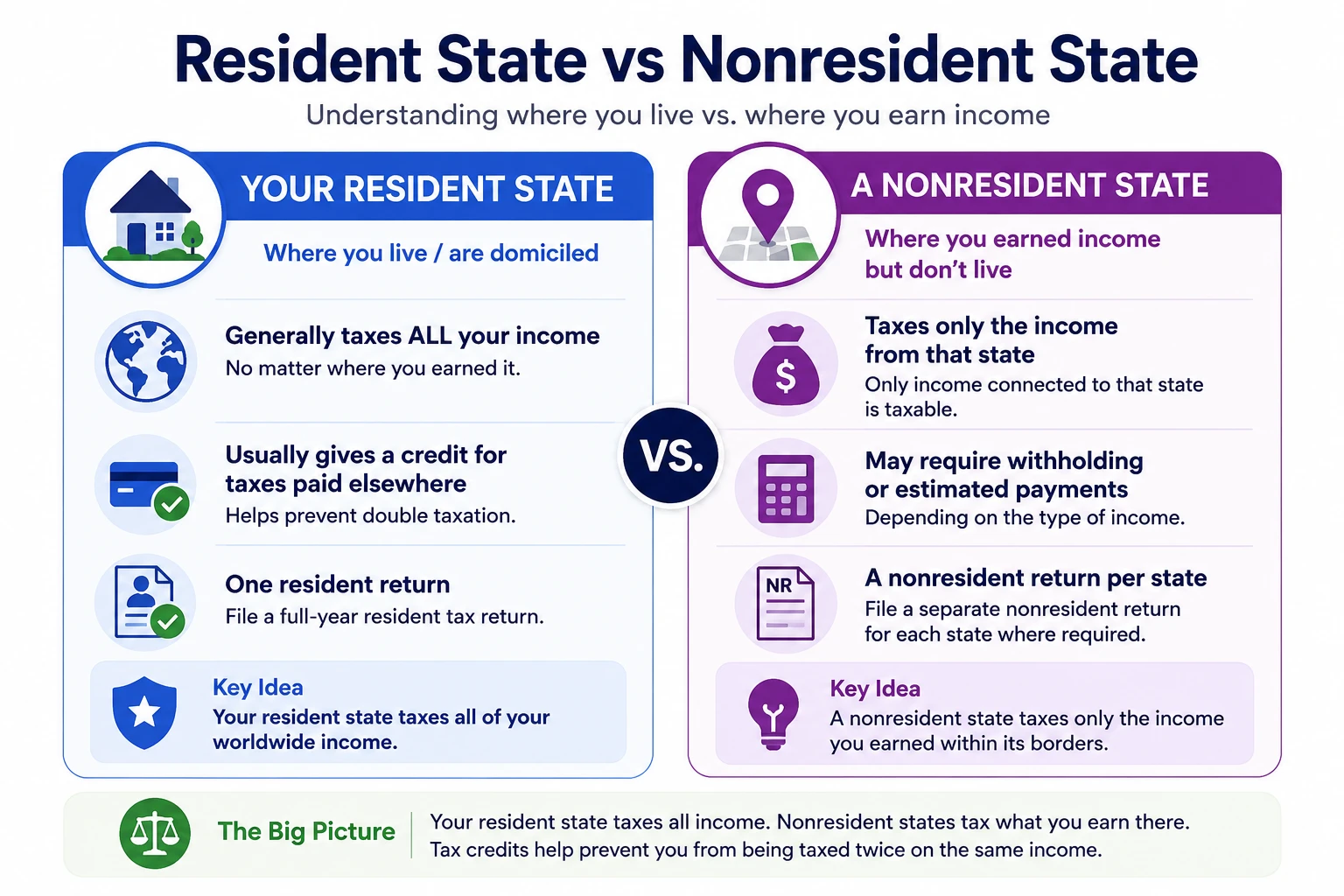
To avoid being taxed twice on the same income, your resident
state typically gives you a credit for taxes you paid to the nonresident state.
The credit is not always dollar-for-dollar, which is why multi-state situations
need a careful look.
What Actually Triggers a Second State Filing
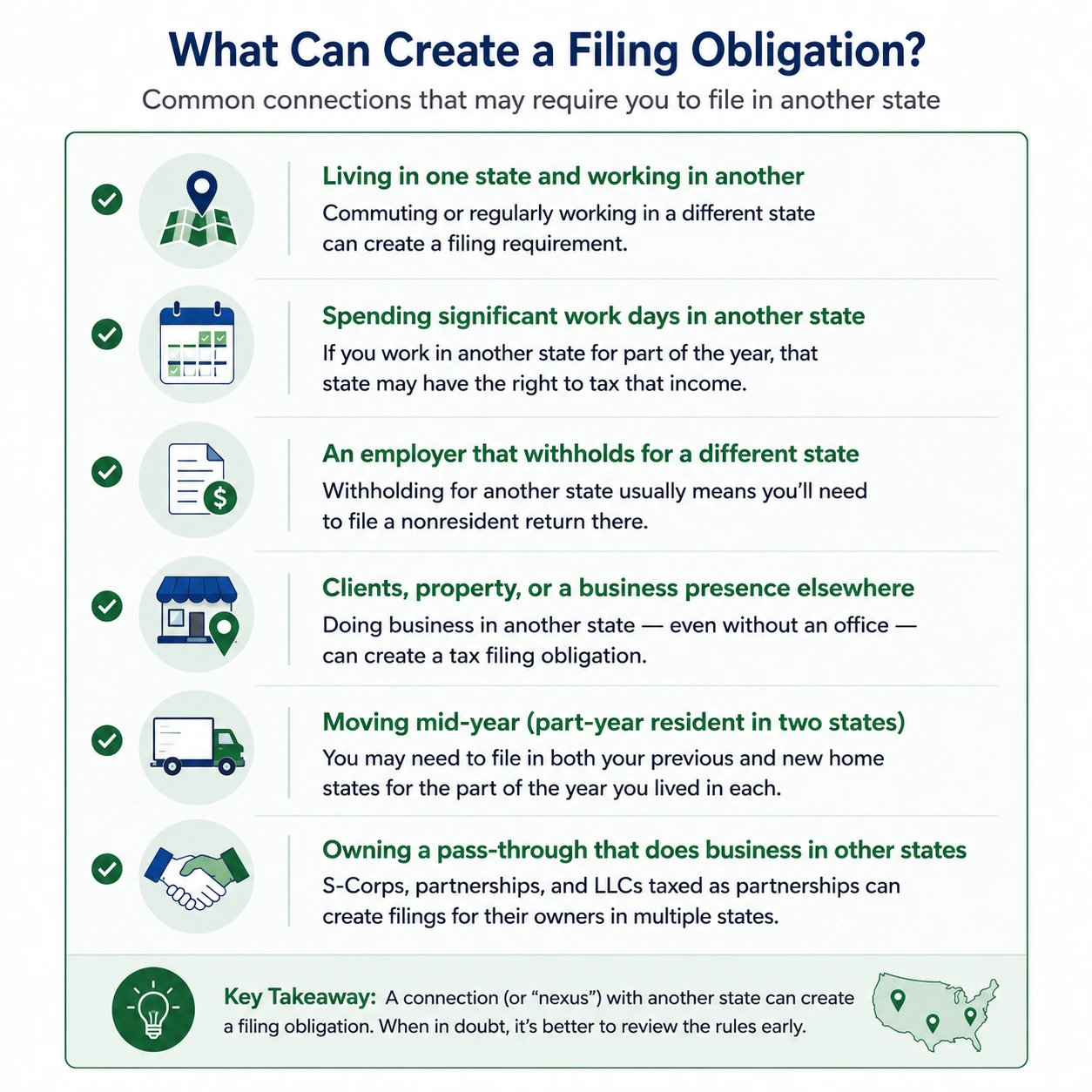
A filing obligation usually comes down to a connection —
sometimes called nexus — between you and another state. Common triggers include
living in one state and working in another, spending significant work days
across state lines, employer withholding for a different state, or running a
business with customers or property elsewhere.
A Few Wrinkles to Watch
Multi-state taxes have some traps worth knowing about before
they surprise you.
·
Moving
mid-year. You may be a part-year resident of two states, splitting your
income between them.
·
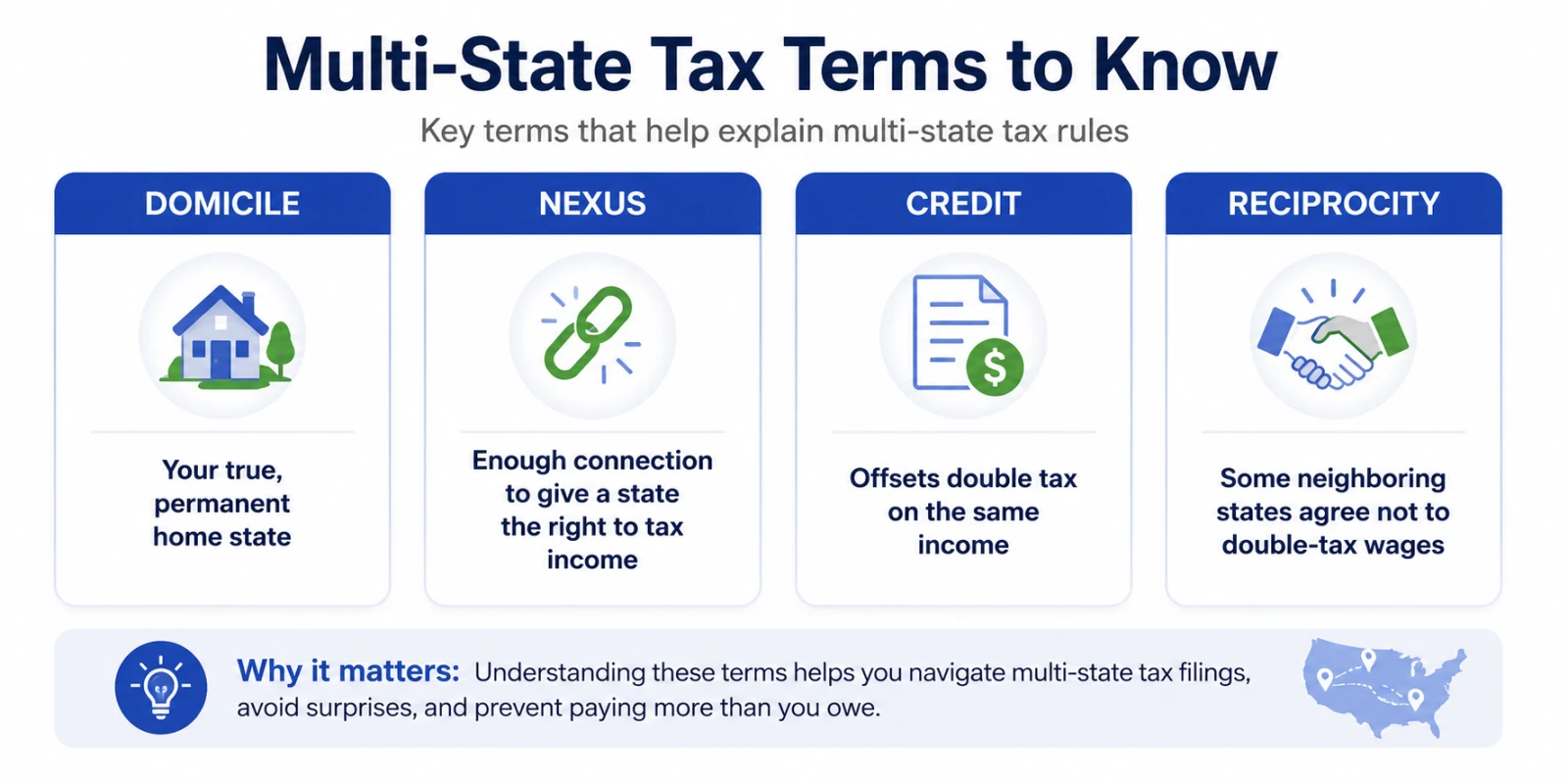
Reciprocity
agreements. Some neighboring states agree not to tax each other’s
residents’ wages — which can simplify things.
·
Convenience
rules. A few states tax remote workers tied to an in-state employer even
when they work from home elsewhere.
·
Pass-through
income. An S-Corp or partnership doing business in multiple states can
create filings for its owners.
|
Key takeaway: Your resident state taxes all your
income; other states tax what you earned there, with a credit to ease double
taxation. Connections like where you live, work, and do business decide where
you file. |
The Bottom Line
Earning income across state lines does not have to be
overwhelming, but it does require attention — the rules vary widely from state
to state. If you moved, work remotely for an out-of-state employer, or run a
business with a multi-state footprint, it is worth mapping out your filing
obligations early so nothing is missed and you do not pay more than you owe.
|
Work with Sapir EA Have questions about your situation?
Schedule a 30-minute consultation at calendly.com/andrey-sapir/30min, call
267-386-7911, or visit sapirea.com. We help business owners and individuals
nationwide with tax preparation, planning, and bookkeeping. |
Disclaimer:
This article is general educational information, not individualized tax, legal,
or financial advice. Tax rules change and depend on your specific facts. Please
consult a qualified professional before acting. Sapir EA • 2370 York Road,
Suite G1 #357, Jamison, PA 18929 • 267-386-7911.